










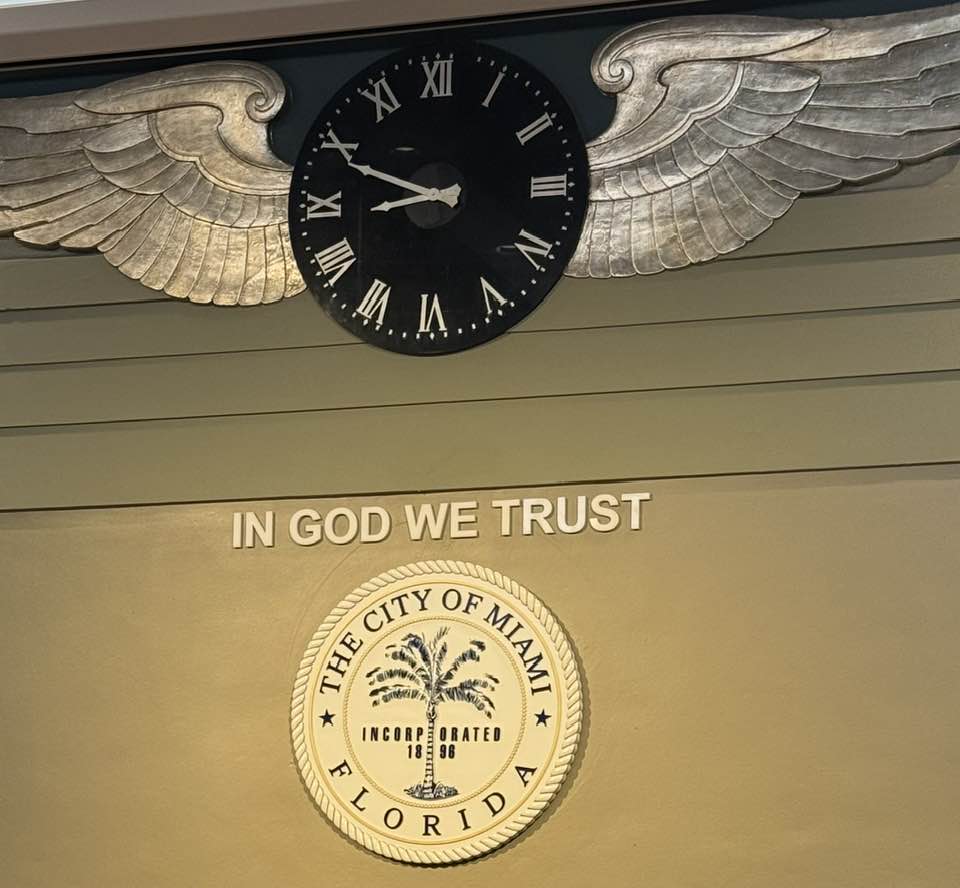
Photo courtesy of upslash.com
MIAMI – The city of Miami is headed for a legal showdown for delaying the 2025 election until next year despite a warning from Florida Attorney General James Uthmeier that it was illegal to do so without voter approval.
Miami mayoral candidate Emilio Gonzalez, a former Miami city manager, filed a lawsuit against the city to block delaying the election and the state is expected to seek litigation as well.
At a June 26 meeting, commissioners voted 3-2 to switch the November 4, 2025, election to 2026, which gives Mayor Francis Suarez, who is term-limited this year, an extra year in political office.
Commission Chairwoman Christian King, whose first term was set to expire in November, also gets a one-year extension as well as Commissioner Joe Carollo, although he voted against Commissioner Damian Pardo’s election reform.
King, Pardo, and Jose Rosado voted for the controversial move while Carollo and Miguel Angel Gabela voted against it.
Despite pressure to veto the ordinance, Suarez, who doesn’t have a vote, signed into law to make the election switch official.
Pardo said switching election years from odd to even years will save the city money and increase voter turnout.
The 2026 is the critical midterm elections when Floridians will elect a new governor and Democrats hope to slow down the sweeping GOP red wave which dominated the 2024 Presidential election.
After commissioners passed the ordinance on first reading on June 17, Uthmeier issued a legal opinion to the city that proceeding with the measure is unconstitutional and violates the Miami-Dade Home Rule charter.
Any charter amendments including changing election years must be decided by voters through a referendum.
“If you nevertheless move forward with the proposed ordinance, my office reserves the right to consider all available actions to prevent this violation of law from occurring,” Uthmeier wrote in a letter on June 25. “The State will not tolerate such an unconstitutional deviation.”
However, Miami City Attorney George Wysong disputed Uthmeier’s legal opinion and said commissioners can change the election years by an approved ordinance.
Wysong’s legal opinion reflects the city of North Miami’s election switch from 2023 to 2024, which also aimed for a bigger voter turnout without residents’ approval.
The move drew legal challenges, but the court sided with the city.
“Our city attorney has been very confident that this will stand up in a court of law,” said Rosado. “But the main reason I voted for this is that I think it’s pro-democracy, so moving elections from odd years to even years should generate a tremendous increase in voter turnout.”
Opponents say the election reform is nothing more than a power grab to give elected officials more time in office including Suarez who’s been an elected official for 16 years.
Some agree that the election switch would save money and increase voter turnout but oppose delaying the election five months before residents were scheduled to vote in November.
Candidates have already filed paperwork to run including Gonzalez, Miami-Dade County Commission Elieen Higgins and former Miami Commissioner Ken Russell, who are all running for mayor.
In all, 17 candidates had filed paperwork to run in the 2025 election.
Gonzalez filed his lawsuit against the city, arguing commissioners ignored Uthmeier’s warning to decide whether to switch election years.
“We are stunned by the brazen actions of Miami’s elected officials,” Gonzalez said in a statement. “Disenfranchising voters undermines our democracy and robs citizens of their voice at the ballot box. If they can steal an election, what else can they steal!?”
Michael Hepburn, who is seeking to become the first Black mayor for the city of Miami, threatened to file a lawsuit also over the election switch.
“It’s not fair to candidates like myself and others who have been working so hard to educate, inspire, and mobilize our residents for this upcoming election,” Hepburn said in a letter to commissioners. “If you proceed forward with pushing forth an ordinance that will change our upcoming elections without having our voters decide and extend your terms by an additional year, I will bring a lawsuit against this action and the city immediately.”
Higgins said in a statement: “City leaders’ decision to extend their terms by a full year without voter approval highlights the dysfunction in our government. While I support moving city elections to even years to boost turnout, bypassing voters was wrong.”
Though changing election year would extend his term in office, Carollo said only voters should be allowed to move the election.
“I believe what the attorney general says it’s illegal and I voted against the move,” Carollo told reporters after the meeting.
Stronger Miami, a community-based group, also denounced the city’s decision.
“Today’s vote is a perfect example of the kind of political manipulation we stand against,” said Stronger Miami in a statement. “Extending elected officials’ terms without voter approval is not reform, it’s disenfranchisement, plain and simple.”
Keep reading for free
You can unsubscribe from the newsletter at any time.

No Comment