










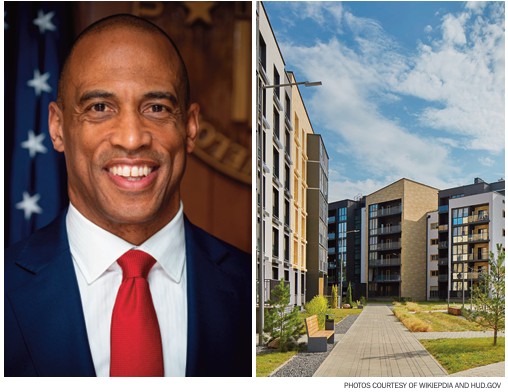
By David L. Snelling
Miami – A proposed policy by the President Donald Trump administration could strip away housing rights for hundreds of thousands of people nationwide who rely on programs by the Department of Housing and Urban Development (HUD).
According to a press release from the White House, the administration is in the process of revamping funding criteria for programs that allow local governments and nonprofits to prevent people from becoming homeless.
Experts warned such a policy could trigger one of the largest homelessness surges in America, as close to 300,000 people or more could lose their housing.
HUD plans to publish new guidance for the Continuum of Care program in its upcoming 2025 Notice of Funding Availability.
The new guidance includes a provision to cap the amount of money local organizations can spend on permanent housing to 30 percent of their total funding.
It also eliminates or reduces funding for organizations that promote DEI through their programs to help find people housing.
According to HUD, as of 2023, roughly 9 million people live in subsidized housing in the United States, which includes various HUD programs.
It highlights the significant impact of HUD’s housing assistance initiatives on low-income households.
An overhaul to HUD’s funding criteria could see $1 billion of available funding evaporate, leaving about 300,000 without housing, according to the National Alliance to End Homelessness.
“People all over this nation have overcome homelessness and stabilized in HUD’s permanent housing programs,” NAEH CEO Ann Oliva said in a statement. “Many are just beginning that process and getting a shot at a new life.”
In addition to the 300,000 possibly being left without housing, more could also face imminent homelessness, particularly undocumented immigrants.
As part of Trump’s massive illegal immigration crackdown, HUD requested that public housing agencies share tenants’ personal information to make sure “illegal aliens” would not receive Section 8 rental assistance over American citizens.
HUD Secretary Scott Turner said agencies that refused to comply would be at risk of losing federal funding for housing programs.
“D.C. Housing Authority is on notice—we are demanding all citizenship information for residents,” Turner wrote on X. “We are telling the same to the more than 3,000 Public Housing Authorities across the country. The taxpayer-funded vacation is over.”
The policy is an effort by the HUD and the Department of Homeland Security to keep illegal immigrants from living in public housing, calling it wasteful misappropriation of taxpayers’ money going to subsidize housing for undocumented migrants.
“American tax dollars should be used for the benefit of American citizens, especially when it comes to an issue as pressing as our nation’s housing crisis,” Turner said in a statement last month. “This new agreement will leverage resources including technology and personnel to ensure American people are the only priority when it comes to public housing.”
The country could experience one of the largest homelessness rates in U.S. history, especially at a time when the affordable housing crisis is gripping the country.
As of January 2024, about 771,480 people were homeless, according to HUD.
The number is an increase of 18.1 percent compared to the previous year, when about 650,000 people were counted as homeless.
Florida is showing improvement in tackling the state’s homeless population, with a 9.3 percent reduction in individuals experiencing literal homelessness compared to the previous year, according to Florida DCF.
Florida, however, still ranks among the states with a large homeless population, with about 27,487 homeless people in January 2023.
“The state’s effort in increasing shelter capacity and innovative solutions have contributed to this improvement, but challenges remain in achieving a permanent housing solution,” DCF said in a statement.
Trump’s first attempt to strip funding from homeless service providers came in May when he paused funding for those who failed to comply with his DEI policies.
Despite a federal court ruling that Trump’s effort was illegal, his administration refused to restore the funding.
In September, the administration attempted to tie federal grant funding for homeless services to “support sanctuary protections, harm reduction practices, or inclusive policies for transgender people.” Groups that supported such policies would no longer receive federal support, according to a lawsuit filed by service providers.
A federal judge in Rhode Island also blocked that effort by the administration. Plaintiffs argued that the administration was “unlawfully [weaponizing] essential housing resources.”


No Comment