










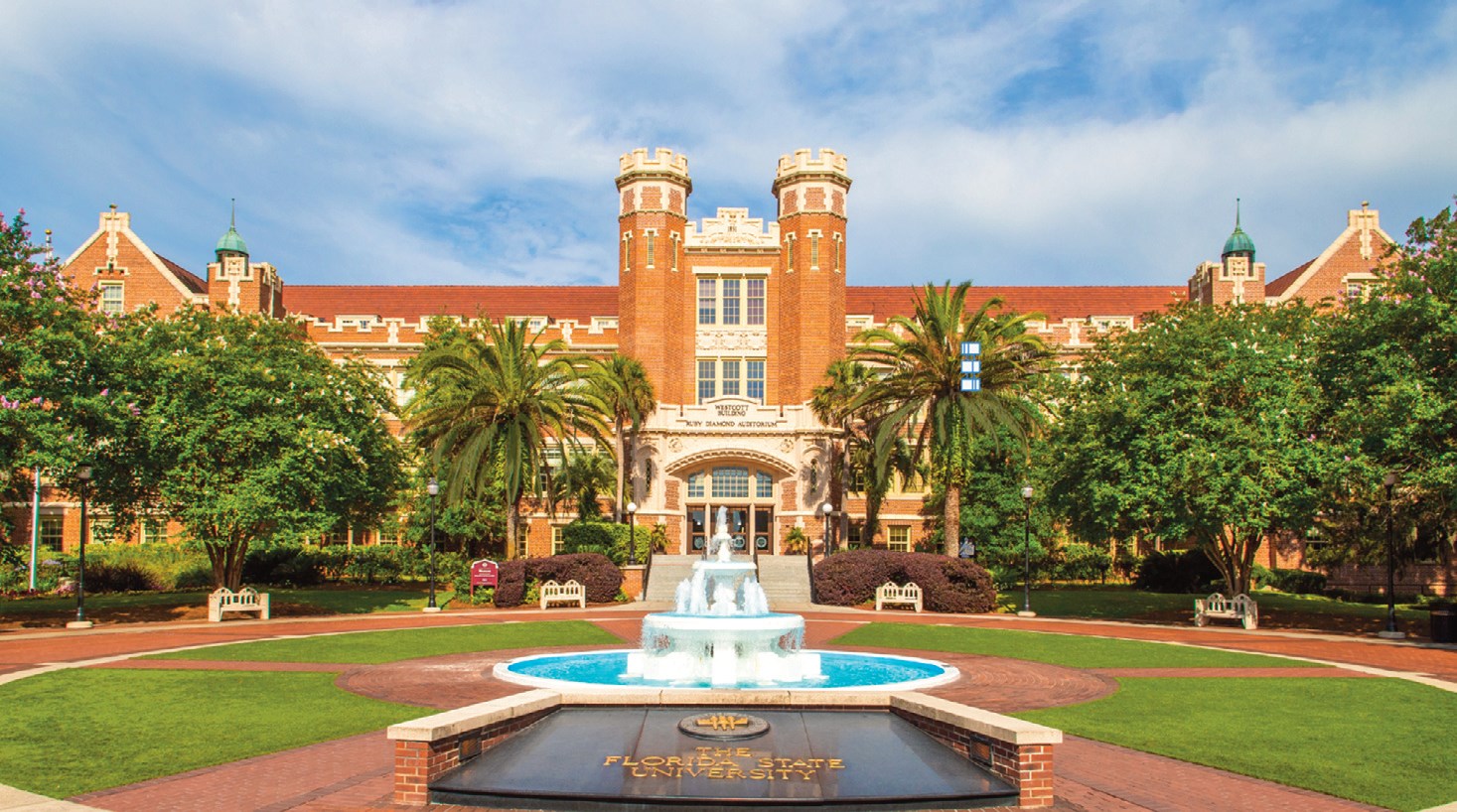
Florida State University PHOTO COURTESY OF FLORIDA STATE UNIVERSITY
Miami – Florida college students are bracing for out-of-state tuition increases after the State University System Board of Governors gave university trustees the green light to increase fees by as much as 15 percent.
It adds another financial burden for students who may lose federal financial aid after President Trump administration’s proposal to cut funding for the Pell Grants program.
Thousands of out-of-town students attending public universities including FAMU, Florida State University, Florida Atlantic University and University of South Florida would be impacted by higher out-of-state tuition costs for the first time since 2013.
In Florida, students from other states and international students currently pay nearly triple the rate in-state students pay on average.
The Board of Governors is allowing public universities to increase out-ofstate tuition up to 10 percent for students enrolled in fall 2025 and up to 15 percent for 2026.
Florida is third in the nation with the lowest tuition and fees for out-of-state students, with an average of $21,690 in 2023-2024.
The University of South Florida currently has the lowest fees among the public universities at $282.00 per credit, and the University of Florida has the highest per credit, at $707.21.
Board of Governors member Alan Levine proposed the out-of-state tuition increase, which the group approved unanimously.
"Our total cost of a degree is one of the lowest in the country for students," he said during the meeting.
Levine said raising it by 15 percent would generate roughly $105 million in revenue each year.
Raising out-of-state tuition costs is another setback for students.
Thousands of Florida college students could lose federal financial aid as part of Trump’s plan to cut down on education funding.
If Trump’s budget for 2025-2026 is approved by the U.S. Senate, students might no longer receive college grants, including Pell Grants, which funded part of their education expenses.
Twenty percent of low-income students rely on Pell Grants and losing the funding, they would fall under the half-time student threshold.
According to reports, low-income students would see awards reduced by about $1,500 due to the new fulltime requirement for school.
At least one-fifth of community college students would completely lose their Pell Grant and about 28.5 percent of recipients enrolled in 24-29 credits would no longer qualify as full-time students.
Pell Grants, which have a maximum value of $7,395, help roughly 40 percent of students attend college.
The grants, which are different from student loans, allow low-income families to send their children to college without necessarily taking on debt.
The Trump administration said the Pell Grants program is experiencing a $2.7 billion budget deficit this year and needs to be cut to balance the federal budget.

No Comment