







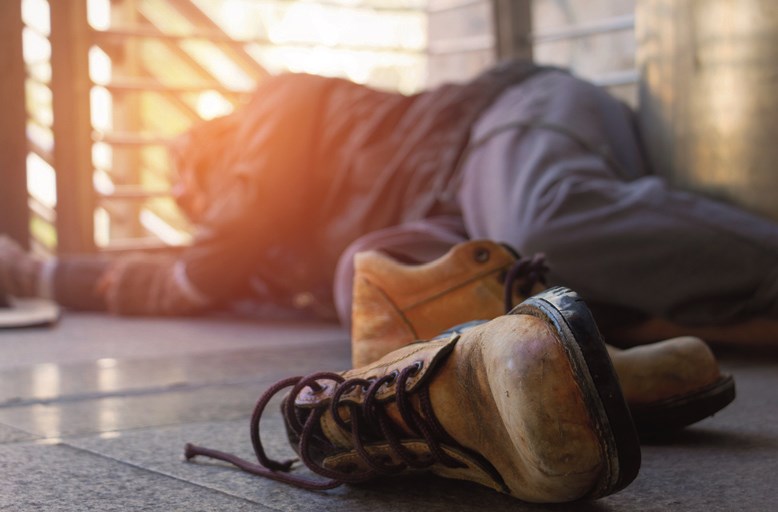
THE CRISIS CONTINUES: South Florida counties take steps in the face of recent federal and state cuts. STOCK PHOTO
By David L. Snelling
Miami – The affordable housing crisis continues to grip Florida, as the homeless rate has increased by 19 percent in 2023 since local governments announced in 2021 that they were finding it difficult to find homes for low-income people.
Even people living above the poverty threshold in Florida are impacted by the affordable housing crunch, as rental rates have soared to 45 percent from 2020 to 2023.
Though workers saw an uptick in Florida’s minimum wage, which will increase to $15 an hour in September, half of Florida’s 35 percent rental population earn income that can’t keep up with the high rates, forcing them to live in their cars, or on the streets, because homeless shelters are filled beyond capacity.
In 2023, according to the National Alliance to End Homelessness, a coalition of groups focusing on strategies to reduce the homeless rate, roughly 15,482 people were experiencing unsheltered homelessness in Florida.
“They are residing on the streets, in vehicles, or in other unsuitable living conditions, ” said Amanda Wander, director of Florida End Homelessness.
Wander said older adults constitute more than a third of the unsheltered population, with 4,989 individuals, or 32 percent, ages 55 years or older.
“This underscores the urgent need for targeted interventions to address homelessness among older adults,” Wander said.
Wander said while Florida officials reported a reduction in overall homelessness from 2022-2023, the National Alliance to End Homelessness study says otherwise.
The analysis says there has been an overall increase which continues to climb each year since 2022.
Only 23 affordable housing units are available for every 100 low-income renter in Florida. Government officials and organizations are struggling to balance the housing landscape.
Florida’s Live Local Act, which is designed to address the affordable housing crisis, has had little impact since lawmakers passed the legislation in 2023.
The act includes a trust fund, homeless assistance grants and other housing initiatives funded at over $900 million.
Expanding workforce housing, facilitating homeownership programs for low-income homebuyers and gradually increasing wages will collectively contribute to the state’s efforts to foster a balanced housing ecosystem where all households have their housing needs met.
For perspective, $49.35 per hour represents the income necessary for individuals to afford housing in Florida’s costliest rental market, the Miami-Fort LauderdaleWest Palm Beach Florida Housing Coalition.
However, rental and homeownership remain out of reach for those employed in entry-level or service industries across the state.
“It is worth noting that individuals working in the homeless service and housing crisis system often contend with low wages, which further imperil their own housing stability,” Wander said.
“The data clearly demonstrates the need, but it also demonstrates the effectiveness of some of Florida’s approaches to addressing the housing needs of people facing housing instability. Communities, organizations, legislators, and advocates must leverage federal, state, and local funding and programs to scale permanent housing solutions.”
Miami-Dade County last month broke ground on two affordable housing developments in Miami and Overtown.
Mayor Daniella Levine Cava said the county doubled the money invested in such projects from $128 million in 2021 to $260 million the following year.
She said 100 new developments for lowincome people were completed, totaling nearly 12,000 units with nearly 5,000 more units in the county pipeline.
But recent federal and state funding cuts might impede several projects, and the county had to freeze Section 8 housing vouchers, citing a $77 million budget shortfall.
That impacts about 5,000 people who were on the waiting list, Clarence Brown, the county’s deputy housing director overseeing Section 8 programs in the county’s Housing and Community Development Department, told the Miami Herald. “Right now because of the shortfall, nobody is coming off of the waitlist.”
In 2023, Broward County saw a surge in its homeless rate, with an estimated 1,500 to 1,700 people living on the streets and another 600 in shelters.
Nearly 48 percent of the homeless population currently live on the streets of Fort Lauderdale, which is home to the county’s main jail. State law bans homeless people from sleeping in public places and they could go to jail if they refuse to go to shelters.
The law allows local governments to set up designated camps, dubbed “tent cities” with running water, toilets, security and access to mental health services.
Broward County officials oppose the idea and say they will rely on other means to get homeless people off the streets and into affordable housing.
According to the Sun Sentinel, Broward had 863 people in shelters and 1,624 living in the streets in January 2023, but by the end of September of that year,8,263 people were homeless.
Palm Beach County is showing improvement in addressing the issue. The county currently has roughly 1,855 homeless people living either on the streets or in shelters. More than 700 are on a shelter waiting list.
The county has launched several programs to assist people through outreach, assessment and housing.
The programs focus on low income and most vulnerable homeless people including offering homeless prevention, emergency shelter, transitional and permanent housing and supportive services.
In addition, families facing eviction can access emergency homeless shelters, short-term housing and other resources for low-income people.




No Comment