








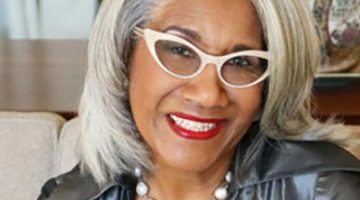

Jannette McCarthy Wallace PHOTO COURTESY OF NAACP
By David L. Snelling
Miami – For more than 100 years, the NAACP has been the largest civil rights advocates in the U.S., fighting for equality for Blacks in governments, jobs, schools, financial disparities and social justice.
But there seems to be a civil conflict with the national organization and the Columbus, Ohio branch of the NAACP.
The national organization ordered the Midwest branch to cease all operations amid turmoil and alleged misconduct by longtime president Nana Wastson who was forced out in January 2025, according to a letter Jannette McCarthy Wallace, general counsel of the NAACP, wrote.
Watson subsequently filed a lawsuit against the national organization over her dismissal.
According to the Columbus Dispatch, a judge ordered a postponement of the scheduled election for the branch’s president on April 2.
The order did not apply to other leadership positions.
The national organization, which is headquartered in Baltimore, Maryland, accused the Ohio branch of refusing to cooperate with the constitution and bylaws for local branches.
Wallace wrote a letter to Columbus branch administrator in April ordering the office to shut down until further notice.
“This refusal to cooperate has caused incalculable harm and has made it difficult for the branch to conduct its important business,” Wallace wrote.
The Columbus branch was prepared to elect a new president when the national organization issued the cease operations order.
The national NAACP organization and the Columbus branch didn’t respond to a request for an interview.
Harold Ford, president of the NAACP South Miami-Dade branch, told the South Florida Times he was unaware of the conflict between the Ohio office and national organization.
“I’m out of the loop on that one,” he said. “I’ve been so involved with the politics in the Florida Legislation.”
Harold said each NAACP branch is required to follow the constitution and bylaws enacted by the national organization to make sure “everyone is on the same page.”
The dispute within the civil rights organization comes at a time when the NAACP is taking on President Donald Trump.
The NAACP filed a federal lawsuit against the Trump administration for forcing colleges to drop their DEI policy or risk losing federal funding which impacts Black students.
In April, a Washington D.C. Circuit Court ruled in favor of the NAACP’s lawsuit on behalf of the Consumer Financial Protection Bureau which allows employees to return to work and continue the Bureau’s mission of protecting consumers from predatory financial practices.
“We cannot allow political agendas to erode an institution built to ensure fairness and accountability in the financial sector,” Keisha Bross, NAACP Director of Opportunity, Race, and Justice, said in a statement.
In addition, the NAACP won a preliminary injunction to block the U.S. Department of Education’s enforcement of a certification requirement which threatens schools with loss of federal funding and Black students’ equal access to a quality education.
A Washington D.C. federal court ruled in favor of the NAACP who called the certification requirement a violation of civil rights laws.
In April the State Bar of Texas rescinded a speaking invitation by NAACP President Derrick Johnson after the organization challenged Trump for dismantling the Education Department.
The State Bar said it avoids speaking topics that seem political.
“They have decided to censor free speech on notions of being political when it’s not political,” Johnson told The Associated Press. “This is the State Bar of Texas. These are lawyers who are sworn to uphold the Constitution of the United States. And nothing about our actions is contrary to the very principles that they have sworn to uphold. And so, I find it ironic to say the least that a lawsuit would generate a rescission of the invitation.”

No Comment