









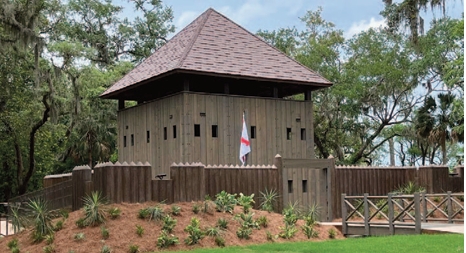
Fort Mose Historic State Park in St. Augustine (Photos courtesy of FLORIDASTATEPARKS.ORG, St. Augustine Black Heritage Trail and Wikipedia)
By David L. Snelling
MIAMI – U.S. Senator Tim Scott (R-South Carolina) is leading a bipartisan campaign to extend the life of the National Civil Rights Network for the next ten years.
Joining Scott are lawmakers Lisa Blunt Rochester (D-Del.), U.S. Rep. James E. Clyburn (D-S.C.) and Mike Carey (R-Ohio), as they introduced the Renewing the African American Civil Rights Network Act.
The bill extends the AACRN for a decade, as the program, which the National Park Service oversees, expired last year under current federal law.
The AACRN is designed to honor people, places and events linked to the modern Civil Rights Movements across 29 states including Florida.
The James Weldon Johnson Park in Jacksonville, Florida was among the sites in the state designed as part of the AACRN in 2020, which commemorates Ax Handle Saturday in August 1960 when a peaceful lunch protest at the W.J. Grant Department Store turned violent.
The site honors the victims and the courage of those who fought for equality.
Other Florida sites that were designed as part of the AACRN include:
* Fort Mose Historic State Park in St. Augustine.
Home to the first legally sanctioned free Black community in what would become the United States, established in 1738.
It is part of the St. Johns County Black Heritage Trail and tells the story of early African American settlement and resilience AFAR.
* St. Johns County Black Heritage Trail also in St. Augustine.
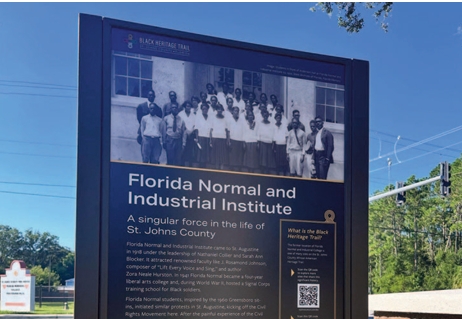
A self-guided tour of 20 historic sites spanning over 450 years of Black history, from the arrival of Africans in 1565 to the Civil Rights era. It includes Fort Mose and other landmarks tied to the movement AFAR.
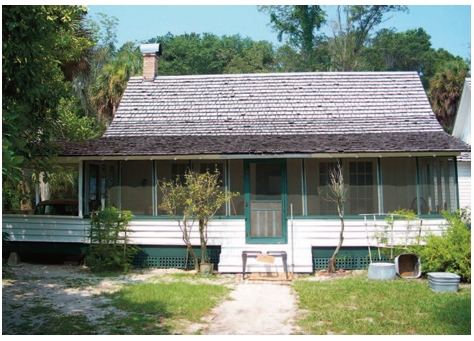
* Marjorie Kinnan Rawlings Historic State Park in Cross Creek, Gainesville.
 )
)
While primarily known for its literary heritage, the site interprets the lives of African Americans in rural Florida during the early 20th century, including tenant farming and interactions with figures like Zora Neale Hurston.
* A. Quinn Jones Center in Gainesville.
Originally Lincoln High School in 1925, it was one of Florida’s first accredited high schools for African American students.
The building is a key educational heritage site.
* Chestnut Funeral Home in Gainesville.
Established in 1914 by Matthew E. Hughes and Charles Chestnut, Sr., this is one of the oldest African American-owned funeral homes in the state, reflecting generations of community leadership.
According to the National Park Service, the sites, while some are part of the AACRN and others are now part of broader heritage trails, all contribute to preserving and interpreting Florida’s role in the national Civil Rights struggle.
Scott underscored the importance of the AACRN preserving the history of African Americans in the U.S. and spurs heritage tourism, which is the bone back of the economy, particularly in rural areas.
“The African American Civil Rights Network not only helps preserve our nation’s history but also strengthens our local economies through cultural tourism,” Scott said in a statement. “As home to the largest share of AACRN sites in the country, South Carolina proves the immense value of reauthorizing this program. We must make sure future generations can walk these historic grounds, learn from our past, and continue striving for a future where the promise of the American Dream is within reach for all.”
South Carolina is home to six historic sites under the AACRN including the Clemson Area African American Museum, Waverly Historic District, St. George Rosenwald School, Harden Street Substation and the Civil Rights Memory Sites in several state parks.
Clyburn also emphasized the economic impact of the program’s collaborative nature.
“The importance of this legislation is embodied in that one word, network,” Clyburn said in a statement. “Today, South Carolina’s top economic engines are transportation and tourism. And the fastest growing aspect of tourism is Heritage tourism. This legislation is pivotal because it involves a network of 29 states that designate sites for visitation that will grow the economy most especially in rural communities.”
Rochester said the network of honoring Civil Rights Movement sites and people part of the struggle go hand in hand with America’s 250th anniversary.
“The African American Civil Rights Network Act of 2017 cemented the historic Civil Rights Movement’s legacy in communities across the country,” Rochester said. “Now, as we celebrate America’s 250th anniversary, this is a moment to further reflect on how the movement shaped our nation.”
Brent Leggs, executive director of the African American Cultural Heritage Action Fund and strategic advisor to the CEO of the National Trust for Historic Preservation, said the bipartisan support is music to his ears.
“The National Trust for Historic Preservation’s Action Fund and its partners are proud to stand in solidarity with organizations across the African American Civil Rights Network (AACRN) in affirming that sustained support for this National Park Service program is critical to preserving a powerful and uniquely American legacy for future generations,” Leggs said. “We applaud the bipartisan leadership.”
The bill, formally titled the “Renewing the African American Civil Rights Network Act,” has been read twice in the Senate and officially referred to committee for further review.

No Comment