








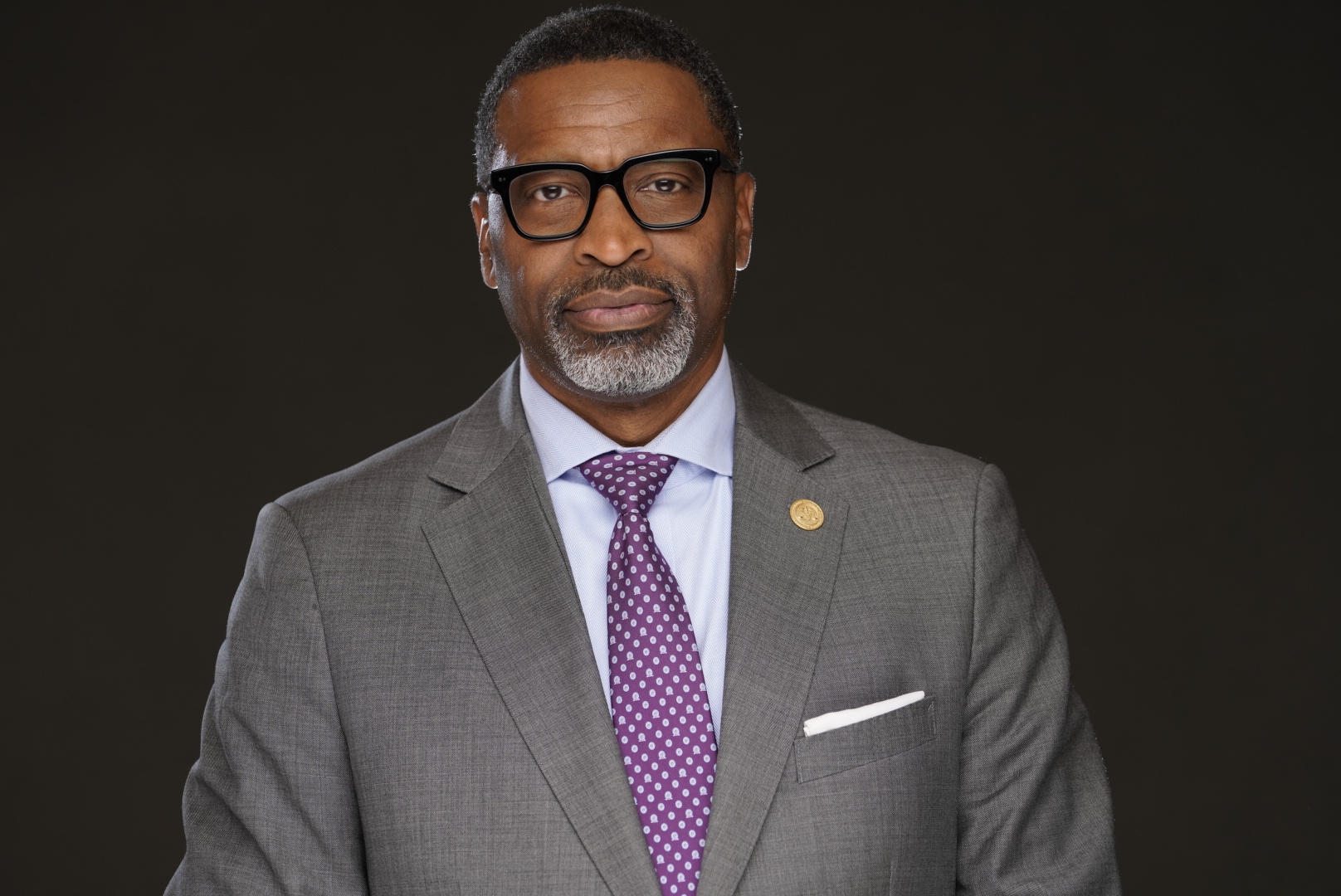
NAACP President and CEO Derrick Johnson (Photo courtesy of the NAACP)
By David L. Snelling
MIAMI – The NAACP is encouraging Black student-athletes to boycott universities and colleges in the south in the wake of the Louisiana Supreme Court’s ruling dismantling a majority African American Congressional voting district amid a nationwide mid-decade redistricting war.
The oldest and largest civil rights group launched its Out of Bounds campaign following the Supreme Court’s decision that threatens Blacks representation in Congress, as part of President Donald Trump’s push for more GOP seats.
Last month, the Louisiana Supreme Court ruled the Congressional district was racial gerrymandering and unconstitutional in the case of Louisiana vs. Callais, gutting the 1965 Voting Rights Acts, while Democrats and the NAACP argue the decision rolls back the power of Black voting.
As a result of the ruling, Republican governors in Alabama, Tennessee, Mississippi and Florida called special sessions to redraw their Congressional districts to benefit the GOP during the 2026 midterm elections.
The NAACP is urging Black recruits to pause their commitment from colleges and schools in the south including SEC powerhouses Alabama and Georgia, Tennessee, Florida, Mississippi, South Carolina and Louisiana State University.
“The NAACP will not watch the same institutions that depend on Black athletic prowess to fill their stadiums and their bank accounts remain silent while their states strip Black communities of their voice,” NAACP National President and CEO Derrick Johnson said in a statement.
The “Out of Bounds” campaign comes as voting rights advocates across generations are grappling with what they see as the latest blow to one of the most seminal victories of the nation’s Civil Rights Movement.”
The Voting Rights Act was enacted to protect minority voters who long faced discrimination in elections.
The NAACP and the NAACP Tennessee State Conference and a coalition of civil rights and community organizations filed a federal lawsuit challenging the state’s newly redrawn Congressional map.
The lawsuit argues the map dismantles the state’s only majority-Black district and weakens the voting power of Black voters in Tennessee.
“Tennessee lawmakers made a deliberate choice to silence Black voters by dismantling a district that has long ensured representation for one of the state’s largest Black populations.” Johnson said. “We’re continuing the fight to protect our voting rights and ensure our communities are fairly represented.”
According to reports, the Tennessee Legislature divided up the state’s sole majority-Black and Democratically held congressional district across three Republican electoral districts.
The redrawn maps prompted Democratic Tennessee Rep. Steve Cohen’s decision not to run for re-election, as his district was placed in a Republican stronghold.
“The maps silenced the Black vote here in Memphis,” he told reporters.
State senators in Louisiana have also passed legislation that would result in the loss of one of the state’s two majority-minority districts.
South Carolina Attorney General Alan Wilson, a Republican who is running for governor, criticized the Out of Bounds campaign on X.
“Student athletes should not be used by the NAACP for political gain because they disagree with a Supreme Court ruling,” he wrote. “That’s wrong, and South Carolina will not be bullied into ignoring the Constitution.”
The mid-decade redistricting war is causing a clamour.
The Virginia Supreme Court delivered a devastating blow to Democrats this month by rejecting a bid to restore the state’s Congressional map voters narrowly approved to give the party a chance to take four seats during the midterm elections.
The state’s highest court dismissed the Congressional map, saying the Constitutional amendment was placed on the ballot after early voting had begun.
Florida’s redrawn map orchestrated by Republican Gov. Ron DeSantis reshaped four districts including District 20 which has been represented by a Black U.S. representative for over 30 years.
The area includes portions of Broward and Palm Beach counties.
The map has drawn lawsuits by voting rights advocates and civil rights groups who call it partisan gerrymandering to benefit the GOP.

No Comment