








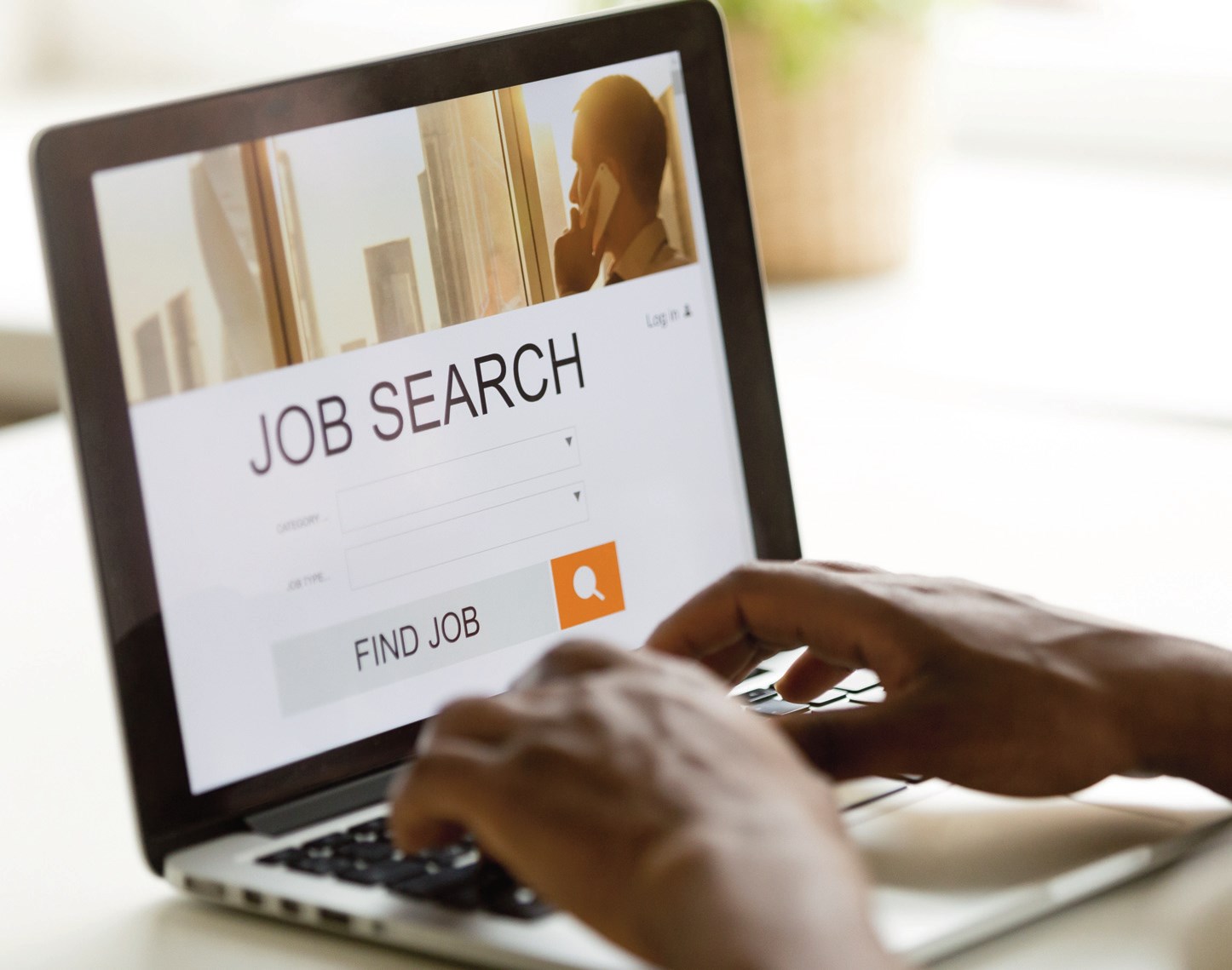
Blacks, Hispanics and women face an uncertain future as hundreds of companies, colleges and housing agencies that rely on federal funding have complied with Trump’s anti-DEI policy. STOCK PHOTO
By David L. Snelling
Miami – Losing federal funding for government agencies, private companies and colleges is critical if they refuse to drop Diversity, Equity and Inclusion (DEI) policies under President Trump’s executive order.
But complying with the decree also could become a political landmine.
It could leave thousands of Blacks, Hispanics and women out of employment opportunities, promotions, college admissions, financial aid, equal education opportunities and housing.
For Blacks, Trump’s decree is sweeping them back to the civil rights struggle of the 20th century when President Lyndon Johnson signed the 1964 Civil Rights Act outlawing discrimination based on race, color, religion, sex and national origin.
Now, Blacks, Hispanics and women face an uncertain future as hundreds of companies, colleges and housing agencies that rely on federal funding have complied with Trump’s anti-DEI policy.
According to a study conducted by the Pew Research Center, more Americans say DEI practices help Black, Hispanic and Asian men and women as well as white women.
However, the survey said far more Americans say DEI hurts white men than say it helps them (36 percent versus 14 percent).
About 56 percent of white men said too many companies are focusing on DEI which is bad for business.
For colleges, Black students are on the verge of losing their scholarships and financial aid while attending predominantly white and African American universities. They say the white universities are pulling back the welcome mat and their college future is in peril.
“It feels like we’re going back. I don’t know how else to describe it,” Breeana-Iris Rosario, a junior at the University of Michigan told the Associated Press. “It’s like our voices aren’t being heard.” The Midwest school is closing its DEI office and scrapping a campus-wide inclusion plan.
With her family living slightly above the poverty threshold in Detroit, Rosario studied hard to earn the LEAD scholarship which gave her an opportunity to attend an upper echelon college.
She chose the University of Michigan and decided to study pre-law.
Rosario said Black and Hispanic students formed a bond on campus, realizing their dreams of attending one of the best colleges in the nation.
With Michigan scaling back on DEI policies, she said it could isolate the minority population.
“It would be hard to find my community (here) if I didn’t have access to these resources,” she said.
Florida A&M University, among the oldest HBCUs in the nation, is also feeling the impact, as the school is forced to eliminate DEI or lose critical federal funding.
The university had to reconstruct its programs’ requirements including limiting race-conscious programming and scholarships, in which Black students depend on those resources for academic, social and emotional support.
“It feels like we’re losing part of what makes FAMU feel like home,” said Auriel Patton, a senior public relations student. “DEI programs helped students like me find community, mentorship and resources that reflect who we are. Without that, it’s like telling us we don’t matter.”
Forced to roll back on DEI puts FAMU in a tight spot, struggling to hold the Black community together for the first time in its 100-plus year history.
The programs that helped Black students strive are thin including funding for student organizations, cultural engagement events and mental health support for underrepresented students.
Nailah Barnes, a campus queen and advocate for inclusive campus initiatives, emphasized the emotional toll these policy changes are taking.
“It’s more than just losing programs; it’s losing safe spaces,” Barnes told
FAMUAN, the school’s newspaper. “But FAMU students are resilient. We’re not giving up. We’re finding ways to keep pushing forward, even if it means creating new spaces ourselves.”
FAMU had no other choice but to drop DEI programs after the Trump administration froze a $16.3 million grant for its pharmacy school.
The grant funded FAMU’s College of Pharmacy and Pharmaceutical Sciences and its long-standing Research Centers in Minority Institutions (RCMI) program.
The program, which debuted in 1985, was renewed last year for nearly five more years.
It helped support research in areas such as cancer biology, artificial intelligence, and health disparities—particularly in underserved communities.
FAMU officials say they’re dealing with other federal funding challenges as well.
While most of the university’s 900plus grants are still active, one other known cancellation involved a $2.3 million subcontract related to Social Security research.
The DEI impact is also felt in the U.S. military.
Defense Secretary Pete Hegseth fired Adm. Lisa Franchetti, the Navy’s first female chief and Joint Chiefs Chairman CQ Brown Jr., who’s Black, without any clear explanation.
Franchetti’s departure left the military without a single woman in a four-star general or admiral leadership position.
Hegseth said the Trump administration is overhauling the military structure and policies that supported mostly minority women in top positions, but critics say the shakeup was political rather than procedural.
Fair housing opportunities for Blacks and Hispanics might dissolve as well.
According to Shelter Force, a national organization that reports monthly on available affordable housing projects, Trump’s executive order threatens the funding of a wide range of housing programs in the U.S. that rely on federal funding.
Some housing assistance non-profit organizations said their future is uncertain because rolling back on DEI diminishes their mission including fighting housing discrimination.
Dozens of groups provide rental assistance and help home seekers with affordable housing programs by matching them up with residential developments primarily for roughly 53,000 struggling minorities nationwide.
They fear Trump’s order will leave them homeless.
Philip Tegeler, executive director at the Poverty and Race Research Action Council, a civil rights law and policy organization, said Trump’s order is a violation of people’s constitutional rights for fair housing.
“Many of the executive orders are unlawful,” Tegeler said. “The president doesn’t have the authority to withhold funds that have already been dedicated by Congress. We’re going to have to rely more and more on the courts.”


No Comment