








Photo courtesy of Getty Images
By David L. Snelling
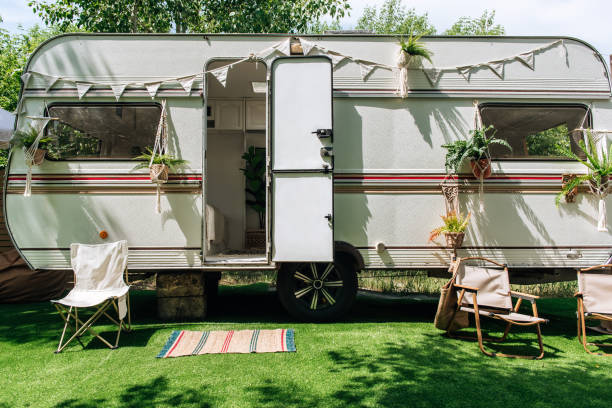
MIRAMAR, Fla. – Responding to a rash of complaints over Recreational Vehicles (RVs) being used as living accommodations in residential neighborhoods, the Miramar City Commission took action to address the issue.
Residents say some recreational vehicles are being used as rentals and others where families are residing in the mobile structures permanently.
The RVs are hooked up to water and sewer and electricity.
Despite entreaties from RV owners who said the structures are the only affordable places where they can live amid the affordable housing crisis, Miramar city commissioners enacted legislation to crackdown on RVs used as homes.
They are now prohibited as rentals and permanent living quarters and violators would be fined up to $500 for each infraction.
City Commissioner Yvette Colbourne, who sponsored the ordinance, said over 80 complaints were filed last year with the code enforcement department.
Some of the homeowners said the RVs used as residencies or rentals could bring down the property values.
“They are parked on sidewalks and it’s not only illegal, it’s a safety issue,” Colbourne said in a statement. “This ordinance is about protecting our neighborhoods and ensuring residential properties are used as intended. As our city continues to grow, we must proactively address practices that contribute to overcrowding, unauthorized housing arrangements, and potential safety concerns.”
Miramar is the latest local city to ban RVs as living quarters.
Hialeah, Miami Gardens and Opa-locka also prohibit recreational vehicles as rentals and permanent living accommodations.
With Florida grappling with the housing affordability crisis, Miramar residents living in RVs are forced to explore other means of residency.
In Broward County, rental rates average $1,450 for a studio, 2,475 for a two-bedroom and $5,973 for a four-bedroom apartment or house for rent, according to RentalHop.com
Miami-Dade County is also caught in the affordable housing crunch, dealing with a shortfall of 90,181 units tailored for households earning less than 80 percent of the median income, which equates to about $75,000 annually, according to miamihomesforall.org.
In both counties, about 2,256 units are allocated for households earning between 80 and 120 percent of the area median income, with an additional 4,321 units targeted for those earning less than 30 percent.
Miami-Dade also adopted restrictions for RVs, as they are illegal on permanent or temporary housing on residential properties, driveways or vacant land.
For senior citizens living on a fixed income, RVs are the last resort when traditional housing is unaffordable, as well as low-income families.
Miramar resident Telmaina Lewis said she’s currently renting an RV with her 4 year-old son after they were displaced due to an apartment fire.
She said she can’t afford the rent in other places.
“This is the only place where I can live,” she said. “But now, I don’t know what we will do.”
Florida law allows RVs as temporary living quarters but local counties and cities can enact residential zoning codes for residential use on private properties only with a special permit.
The complaints by Miramar residents prompted the new ordinance, possibly leaving people homeless.
Lewis said living in an RV on private properties beats going to a homeless shelter or sleeping out in public places which is against the law in Florida.
If people refused to go to shelters, they could be arrested.
“No place to go for me and my child,” she said.
Miramar resident Laz Soto said people should be allowed to use their RVs as rentals if they are parked on their own properties.
“For me, it doesn’t bother me,” Laz Soto said Soto, who has an RV parked in his backyard. “If someone has an RV and they park it on their property, that’s their business.”
Residents seeking additional information may visit the city’s website or contact the Miramar Police Department’s Code Compliance Unit.

No Comment