






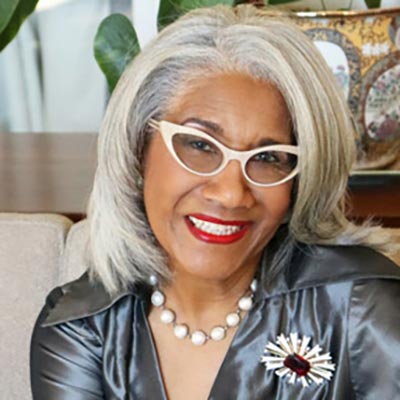
By Antonia Williams-Gary
“Sticks and stones may break (my) bones, but words will never hurt (me)”.
One of the biggest challenges in our modern society is how to navigate through the multiple avenues of news/information available on a twenty-four-hour loop. Traditional news outlets (print, radio, network television) have been joined by so many alternative sources, including Truth Social, the US President’s own social media platform. Individual efforts to vet sources are nearly insurmountable.
One result is that middle of the night screeds from Trump’s Truth Social often set the headlines and news cycle for days after his posts.
How can an average person filter what is worthy of examination, further debate, acceptance or rejection?
Who can you trust?
Journalists. Especially Black Journalists.
Journalists have a high bar to maintain. They are, by the very nature and definition of the fourth estate (its historical role is to hold government accountable), required to report on what is happening- truthfully, transparently, responsibly, and with no other intention except to be faithful to their creed.
There are several purveyors of information who are not bound by ethical codes of conduct; called by various names, but short of “professional.”
Last week, the National Association of Black Journalists (NABJ) issued a statement condemning Trump for, once again, insulting another Black journalist. Akayla Gardner, MS Now White House Correspondent, has joined the ranks of Yamiche Alcindor, Abby Phillip, April Ryan, among others, all of whom have been on the end of Trump’s vile spewing invectives.
Under the current administration, print and broadcast journalists, media contributors and opinion writers have been repeatedly denigrated and placed in such low esteem that it has forced open new channels for self-examination, a review of the profession’s ethics and values amidst a deep questioning of what matters most in the new world order defined by chaos and confusion.
Black journalists have been the vanguards in resistance and fight for Black liberation, yet their value is being reduced to a new low by Trump. It is a direct threat to our struggle for independence and autonomy.
Trump has called journalists “dumb,” “stupid,” or “piggy,” to list just a few of the slings and slurs launched at my colleagues. He repeats the same insults, underscoring how his vocabulary of insults is bereft of any depth, matched only by his thoughtless and truncated utterances. “Bigly,” indeed.
It would be so easy to cut Trump down to size. Matching or mirroring Trump’s inelegance is beneath the dignity of the cadre of erudite, highly committed, skillful, and competent members of NABJ/other journalism associations.
Despite the relentless attacks, we are not confused. No, constant chaos offers an opportunity to conjure thoughtful responses in service to the public’s right to honest reporting, calm yet measured commentary, and research-based opinions.
The work of good journalism has been an essential part of the Black protest movement since the beginning of this country’s development. Black folk have always offered voices of reason and resistance.
For instance, The Freedom Journal, New York (1827-1829), is recognized as the first of its kind. The North Star, famously started by Frederick Douglass (1847) was widespread amongst Blacks and whites who were advocating for abolition. Publication of Black-owned newspapers followed Black folks’ expansion from the South into the far west where The California Owl was published in 1879.
Special-interest newspapers and magazines were established. The Women’s Era, owned by Josephine Ruffin, was published in 1894.
By the 1950s there were over 200 Black-owned weekly newspapers and magazines throughout the county.
The Crisis, established by the NAACP in 1910, is still in publication. The popularity of some of the weekly papers, such as The Pittsburgh Courrier, The Afro-American and The Chicago Defender, was so high that they were distributed nationwide!
Black women journalists have long been on the scene. One of my idols, Ida Barnett-Wells, was an investigative journalist who chronicled lynchings across the south and mid-west from 1890s-1920. Public zeal for her work was so high abroad, she was able to raise money to support the legal fight against those who terrorized innocent Black men. Yet, the buffoon-in-chief continues to try to silence the likes of Nicole Hannah-Jones (The 1619 Project), Isabel Wilkerson (Pulitzer Prize winner), Joy Reid, Don Lemon, and so many others who remain on the frontlines of journalism today.
The cadre of Black journalists grow stronger and more resolute to speak truth to power.
Today, media outlets include many varied formats, including podcasts, Substack, AI-driven platforms, etc. But the information highway still depends on reliable and verifiable data from people who are disciplined by principles and who are accountable to a professional code, including a discerning consumer-base.
Thus, you must continue to demand good data from good people and filter out the noise from unaccountable clowns performing in a three-ring circus of oddities and curiosities designed to keep us out of balance and bamboozled.
And that includes irresponsible Black newsmakers.
Our fight for complete inclusion is never-ending. Recent court reversals have begun a march toward complete disenfranchisement. We are all called to stand on the battlefield in our ongoing fight for justice.
Remember, weapons come in many guises; a pen can be mightier than a sword. We must not
let them silence our mightiest warriors.
Keep reading for free
You can unsubscribe from the newsletter at any time.



No Comment