







Photo courtesy of Vecteezy.com
By David L. Snelling
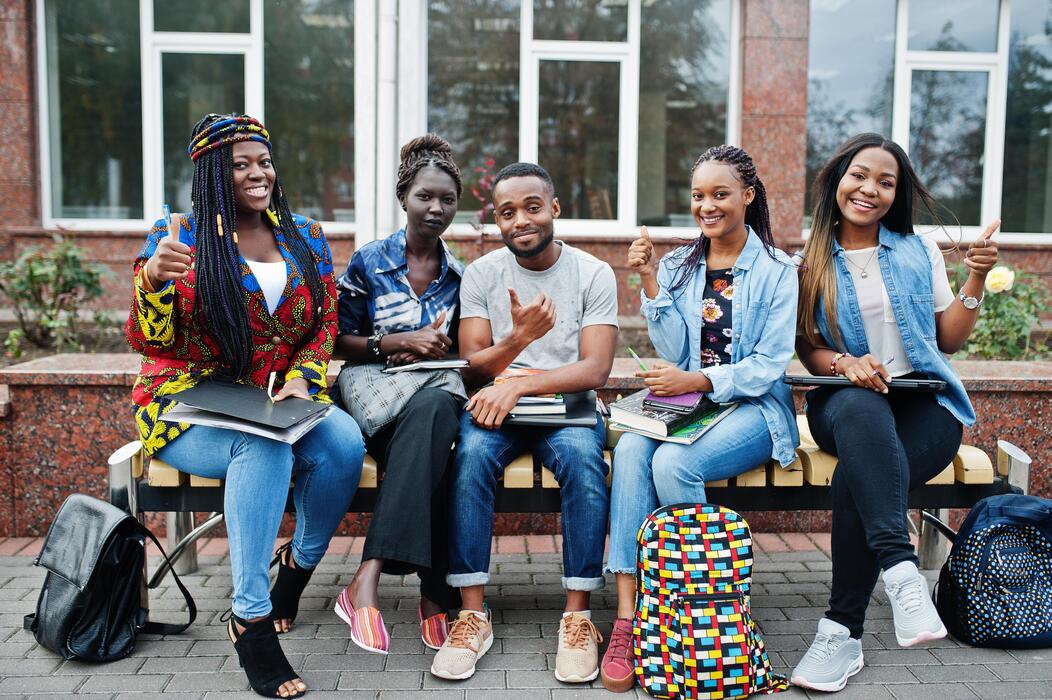
MIAMI – HBCUs have seen a sharp increase in student enrollment since the United State Supreme Court’s Affirmative Action ruling and the President Donald Trump administration’s crackdown on Diversity, Equity and Inclusion (DEI) programs at colleges and universities nationwide.
According to the National Student Clearinghouse Research Center, student enrollment at HBCUs is on the rise as the landscape of higher education has shifted, while student admissions at Ivy League schools including Havard, Princeton and Yale are on the decline.
Morehouse, North Carolina A&T, Jackson State University, Albany State University, Southern University, Alabama A&M University and other HBCUs have reached historic rates of student enrollment in the past two years at 8 percent.
A recent study by the Hill shows that Black student enrollment at Ivy League schools and predominantly white colleges and universities declined compared to the fall 2023.
At Harvard, 11.5 percent of the Class of 2029 are Black, and 11 percent are Hispanic, down from 14 percent Black and 16 percent Hispanic in the Class of 2028.
Some institutions reported that Black students represented just 2 percent of their freshman class.
The National Student Clearinghouse Research Center says North Carolina A&T State University, one of the largest public HBCU, has seen the most rise in student population at over 15,200 students.
It marks the 12th consecutive year of student growth, while Howard University’s undergraduate population mushroomed by nearly 25 percent in the past three years, reaching more than 11,000 students.
Spelman College also saw an influx of students with 11,500, 20 percent more over a five-year period.
The center said the large numbers of enrollment shifts can be attributed to the 2023 U.S. Supreme Court’s decision to end Affirmative Action, which eliminated the requirement to consider race-conscious admissions.
Following the landmark decision, many Black students opted not to attend predominantly white colleges and universities, fearing their chances were slim for admissions.
As a result, the Black student population went downhill for Ivy League schools, as Harvard University’s Black freshman enrollment tumbled from 18 percent down to 11.5 percent, Columbia University, which experienced the largest Ivy League decline, dropped from 20 percent to 13 percent, and Princeton University saw its population of incoming Black students cut nearly in half, plummeting from 9 percent to 5 percent.
Trump’s DEI rollback also impacted Black student enrollment at Ivy League schools and predominantly white colleges and universities.
North Carolina A&T State University Chancellor James R. Martin II said the student population increase for the 12th consecutive year says a lot about the school.
“The 2025-26 student body reaffirms our commitment to the people of North Carolina, our national appeal and impact as an exponential, doctoral research HBCU and the promise that North Carolina A&T holds for students around the world,” said Martin. “We embrace the opportunity to prepare them for a world undergoing seismic knowledge and technology shifts and to guide their development as individuals, ready for lives of achievement and meaning.”
Morehouse College says it has achieved an enrollment record with the Class of 2028, as more than 2,500 students averaged a 3.7 GPA.
“There were more than 7,000 applications from students looking to attend one of the top HBCUs in the country,” Morehouse College said in a press release.
“Means white colleges losing students? Money lost?”
But the historic enrollment for HBCUs comes with several challenges including budget issues due to overpopulation.
The spike in admissions have stretched some underfunded campuses to their limits.
To address overcrowding, several institutions have had to implement creative measures.
For example, Fisk University invested $4 million into a student village made from retrofitted shipping containers, while Jackson State University resorted to leasing nearby commercial hotel rooms to navigate housing shortages.
The Thurgood Marshall College Fund and various university administrations are currently dealing with severe housing shortages, dining overloads, and campus infrastructure strains due to these consecutive, back-to-back years of historic enrollment highs.
“It is a good problem to have, but it underscores the urgent need for greater investment in these vital institutions,” The Thurgood Marshall College Fund said in a press release.
Morehouse College got a big financial boost thanks to its alumni donors who contributed more than $10 million in 2026, a record from 3,910 donors in a single year.
The money was raised through the President’s 800 New Alumni Donors Challenge, which welcomed 615 new alumni donors in just two months.
“Every gift reflects a shared commitment to advancing the Morehouse Mission and investing in the next generation of leaders,” Morehouse College said on social media. “Together, our alumni are expanding opportunities for students, strengthening our institution, and ensuring that the Morehouse legacy continues to thrive.”

No Comment