







Photo courtesy of AOL.com
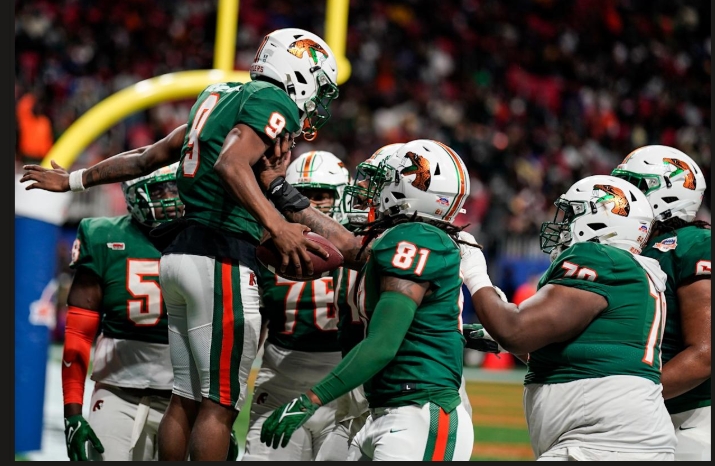
MIAMI – For decades, Florida A&M University has been the face of the Orange Blossom Classic, pitting the Rattlers football team against other HBCU rivals.
And don’t forget the battle of the bands, as the Rattlers Marching 100 continue to blow away the competition, and the parade.
While the re‑established OBC since 2021 has shifted some of its pregame and weekend activities to other formats, the parade remains a signature cultural element of the Classic.
In past decades, the parade featured bands, dancers, and floats rolling through the streets, creating an electric atmosphere of community pride.
The Rattlers once again are back in the event to kickoff the season on Labor Day, September 7, 2026, against defending HBCU national champion South Carolina State at Hard Rock Stadium in Miami Gardens, Florida.
Founded on Florida A&M’s campus, the Orange Blossom Classic grew into one of the most significant events in HBCU sports, once regarded as the de facto Black national championship.
That history made the Rattlers’ brief absence from the game stand out even more.
“When you think about the Orange Blossom Classic, it’s synonymous with FAMU,” event director Kendra Bulluck-Major told HBCU Sports on Friday. “It was always FAMU. There aren’t too many games in this space identified with one school the way the OBC is with Florida A&M.”
The Rattlers returned to Miami Gardens in 2025, after missing the Orange Blossom Classic in 2024.
“It was always our intention for FAMU to be a part of the game,” she said. “As far as we were concerned, they would be there in perpetuity.”
According to Bulluck-Major, the absence was not driven by the Classic’s organizers but instead came down to institutional leadership decisions at the time. Once new leadership emerged, the path to reunification became clear.
“Once new leadership came on board, it was a no-brainer,” she said. “If there’s an Orange Blossom Classic, there needs to be a FAMU.”
Beyond tradition, Bulluck-Major pointed to South Florida’s deep ties to the university as another key factor.
The region boasts one of the largest concentrations of FAMU alumni, making Miami Gardens a natural stage for the program.
“To be able to have them here, seeing FAMU in their backyard, and introducing the university to a new generation, that was very important,” she said
Keep reading for free
You can unsubscribe from the newsletter at any time.

No Comment