








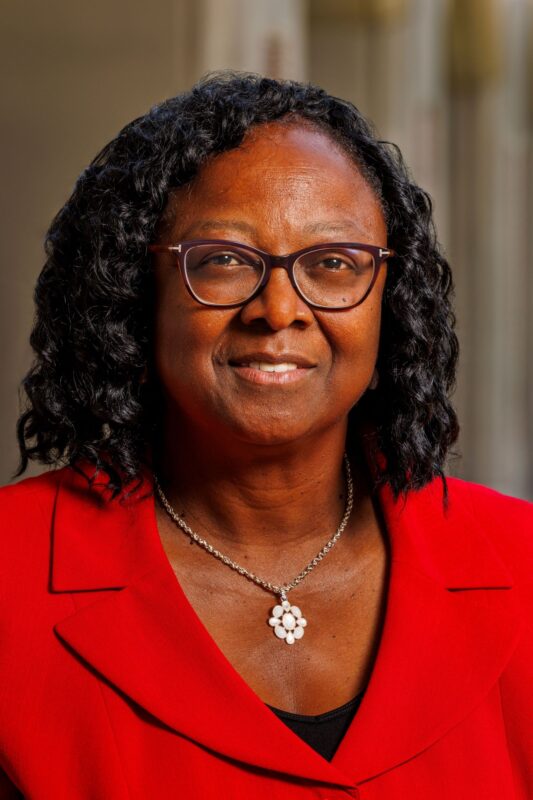
(Photo courtesy of Florida State University College of Medicine)
By David L. Snelling
MIAMI- Growing up in rural Quincy, Florida, Dr. Alma Little watched so many of her family members succumb to deadly diseases including cancer and heart disease.
Her father died of a heart attack when she was 14 years-old and she also lost siblings, nieces, nephews to illnesses, which left her in a tailspin of despair.
It was difficult to cope with the deaths of her family members but also became the impetus for her to pursue a career in medicine and leadership.
In addition, with inspiration from her second-grade teacher, Dr. Little is a prominent family medicine physician and reached the pinnacle of her career when she was chosen Florida State University College of Medicine Dean.
“My second-grade teacher, Mrs. Hazel planted the seed when I didn’t even know what it really meant to be a doctor,” Little said. “I never forgot her words, ‘Alma, when you grow up, I think you should be a doctor.’ Those words started to come to fruition as I grew older and started to see what limited or no access to healthcare looked like. I had multiple close family members suffer unnecessarily from preventable and/or treatable illnesses and saw too many of them succumb to those illnesses. It didn’t hurt that I fell in love with math and science, which formed the building blocks for me to be successful in school.”
With a medical career spanning nearly 40 years, Dr. Little was chosen to take on another significant role.
Dr. Little was named the 150th president of the Florida Medical Association, leading an organization with more than 25,000 doctors including osteopathics of medicine, orthopedics, oncologists, obstetricians/gynecologists and heart surgeons.
Her appointment marks a historic moment as she is the first medical school dean to hold this position.
She was installed as the new president on August 1 during the association’s annual conference in Orlando.
As president, Littles will chair the FMA Board of Governors, which is responsible for establishing policies for the organization, and she will serve as its chief ambassador.
Her appointment is seen as an opportunity to serve not only physicians but also patients and communities relying on healthcare services.
“While assuming this role is one of the greatest honors of my professional career, I am humbled by the opportunity and mindful of the responsibility,” Littles said. “I see this role as an opportunity to serve, not only physicians, but also the patients and communities who depend on us.”
Debuted in 1874, FMA represents over 25,000 physicians on various legislative, economic and ethical issues.
In addition, FMA Alliance, established in 1926, supports Florida patients and physicians, engaging in health-related advocacy.
Both organizations play significant roles in shaping the future of medicine in Florida and provide resources and support to their members.
“This advocacy will include supporting physicians, residents and students as we all navigate the very necessary implementation of AI and other emerging technologies, while maintaining the human connection at the heart of the patient-physician relationship,” Littles said.
FMA Chief Executive Officer Chris Clark said Little has demonstrated excellent leadership in the medical industry which led to her appointment. “Anyone who has worked with Dr. Littles knows that the superlatives are well-deserved,” said Clark. “She’s a remarkable person and a consistently remarkable physician leader. The FMA has always valued having close relationships with Florida’s medical schools. So, the fact that Dr. Littles is the first medical school dean to serve as FMA President in our organization’s 151-year history is especially meaningful.”
Dr. Little was the catalyst for the opening of the FSU College of Medicine in the early 2000s.
Before taking the helm as dean in 2024, Dr. Little served as the medical school’s interim dean and as senior associate dean for medical education and academic affairs.
Dr. Little was the first in her family to attend college and earned her medical degree from the University of Florida.
Dr. Little said she chose family medicine because she enjoys the relationship aspects of it and the fact that it allowed her to see patients throughout the lifespan, from newborns to the elderly, and care for the total person.
“I found that knowing something about my patients’ families and socioeconomic challenges or assets helped me provide better care to them,” she said. “I didn’t feel limited in who I could have as a patient based on gender, age, or chief complaint.
Dr. Little said that family medicine also required her to stay current in all aspects of healthcare, including advocating for her patients before policy and legislative bodies.
“While I am no longer in direct patient care, I feel that my training as a family physician prepared me well for my role as a medical school administrator and teacher,” she said. “That aspect of not knowing what is behind the next exam room door, but needing to be ready for anything, comes in very handy in what I do every day overseeing the medical education program for the FSU College of Medicine.”
Dr. Little underscored the importance of Black representation in family medicine.
She said the mission of the FSU College of Medicine is what enticed her to leave medical practice and join the new medical school as it was being established.
Dr. Little said embedded in that mission statement is a focus on training physicians who will care for patients in underserved populations, as well as recruit students from those populations that are underrepresented in medicine.
“As human beings, we seek care from physicians we feel are competent and caring , but we also want to see a representation of physicians who we feel will understand us because they’ve ’walked in our shoes’ among those in the profession,” she said. “That is not to say that every African American patient is looking for an African American physician, but they do want to know that there are African American physicians who are in the profession and providing perspective of their unique characteristics and challenges. This is true for every group of patients.
“So, we have an obligation to make sure the physician workforce represents the full diversity of our society so we can provide the best holistic care to all of our patients.”
Dr. Little previously served as chair of the American Medical Association’s Academic Physicians Section and as delegate to the AMA from the Academic Physicians Section.
She is also the vice chair of the Council of Florida Medical School Deans.
She was also a past president of the Florida Academy of Family Physicians and the Capital Medical Society, and her accolades include the 2019 Elizabeth Blackwell Medal from the American Medical Women’s Association.

No Comment