







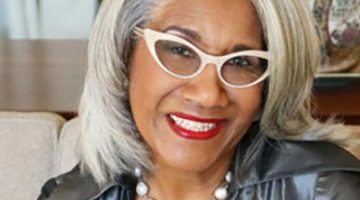


Dr. Marvin Dunn PHOTO COURTESY OF FIU
By DAVID L. SNELLING
MIAMI – A new proposed affordable housing complex in Miami will bear the name of a low-cost housing advocate who is also a champion for racial justice.
Dr. Marvin Dunn, a longtime Black historian, is being honored for his major contributions to the South Florida community and beyond.
A proposed affordable multi-family housing community called Dr. Marvin Dunn Manor, 7000 N.W. 27th Ave. in Miami, will be named after the Florida International University psychology professor emeritus.
Coral Gables-based developer Stone Soup Development is building the $76.1 million project on a 1.87acre site adjacent to Motel X.
According to the development plans submitted to Miami-Dade County for approval, Dr. Marvin Dunn Manor has seven stories with 101 residences, 25 studio apartments and 76 one-bedroom homes.
The affordable housing units will be reserved for tenants earning 30 to 80 percent of the area median income.
This means, for a four-person household to qualify for residency, it would have to earn between $37,150 to $99,100 annually.
Miami-Dade County’s median income was $87,200 as of 2024.
In addition to the 101 homes, there will be 41 parking spots, made possible with a parking reduction.
Dunn told the South Florida Times that a longtime associate of his from the development company wanted to name the complex in his honor since he’s been an advocate for affordable housing for years.
Dunn said he initially declined but the associate convinced him to put his name on the housing project.
“The associate called me and asked me to lend my name on the building,” Dunn said. “I was very cautious because you usually put someone’s name on a project or street after they are gone. Putting a name while a person is still living is a risk.”
Dunn said the project comes at a critical time when Miami-Dade is gripped by the affordable housing shortage.
He said his son, who was a senior prosecutor in Miami, and his wife couldn’t find a home to purchase to their liking in the South Florida area.
Dunn said they moved to Tulsa, Oklahoma and found the home of their dreams.
He said the affordable housing shortage is causing an exodus and some people are forced to move back to their parents’ home to eschew being homeless.
“A lot of people who were on their own with their own places now find themselves moving back home with mom and dad,” Dunn said. “Affordable housing is lacking in Miami.
Representatives from Stone Soup Development couldn’t be reached for comments.
Dunn has been a major contributor to urban development and community engagement over the years.
He has been involved in development planning for a series of affordable housing projects in Miami-Dade County including major renovations of Liberty Square in Liberty City.
It is one the oldest public housing projects in the county which borders N.W. 62nd St.., N.W. 67th Street and N.W. 12th and 15th Avenues.
The $285 million project, funded by federal, state and county resources, was designed for a mixed-use, mixed income public complex that is the largest renovation and revitalization of a public housing complex in county history.
Dunn said during the planning stages, he recommended making the new Liberty Square a gated community where police officers can live to deter crime in the area.
But county officials and developers shot down his idea.
Dunn has also been involved in urban farming initiatives such as the Roots of Hope project, which was designed to create jobs and enhance the community through gardening.
But he had deep roots in DeLand, Florida, where he was born during the Jim Crow era.
In his book, “A History of Florida Through Black Eyes,” Dunn chronicles the events of the harsh mistreatment African Americans endured including imminent death at the hands of white supremacists.
The ordeal left a lasting impression for Blacks even after the Jim Crow law was abolished.
“I was so used to seeing the signs that read, ‘Whites seat from front-Colored seat from rear’ on public buses that, when they were finally removed in the 1960s, sometimes I thought I still saw them there,” Dunn said in his book.
“Even after his death, Jim Crow was, for a while, omnipresent mentally and emotionally in our lives; such had been his reach. No black person I knew escaped the impact of the Jim Crow system or the possibility of being killed for no other reason than being black. A black person in Florida, during the time I grew up, lived with a pervasive awareness of the limitations a racist society imposed and of the impact those limitations imposed upon one’s life.”
Dunn was touched by the 1923 Rosewood massacre in rual Levy County, Florida, where six Blacks were killed but other accounts suggested a higher death toll of 27 to 150.
The town of Rosewood was destroyed during a race riot.
Dunn purchased land near the Rosewood massacre and launched his “Teach the Truth” tour to take a busload of people to explore Black history in Florida and Miami including the site of the killings.
His tour focuses on racial violence and history, and the Black Miami in the Twentieth Century tour, which delves into the contributions of American Americans to the development of Miami.

No Comment