







• Home
  • Login
  • Register
  • Digital Edition
  • About Us
  • Staff
  • Russia cements its role as Africa junta protector after helping quell Niger’s mutiny
South Florida Times
  • News
    • Around South Florida
    • Black News
    • Florida
    • Local News
    • National & World
    • Caribbean News
    • Opinion
    • Prayerful Living
    • Young Haitian immigrant feared deportation commits suicide

      David Snelling, September 3, 2026
    • Late Congresswoman Carrie P. Meek to be honored with historical marker

      David Snelling, September 3, 2026
    • Miami-Dade Commissioner Hardemon to join economic mobility summit panel

      David Snelling, September 3, 2026
  • Business
    • Insurance
    • Credit
    • Loans
    • Trading
    • Mortgage
    • Donate
    • Ownership over Access: Several key takeaways from the Greensboro Business League Executive Round Table

      David Snelling, July 9, 2026
    • Hospitality Trends: The changing expectations of modern travelers

      David Snelling, June 25, 2026
    • AI companies should release environmental impact, commit to clean energy, says UN chief

      David Snelling, June 25, 2026
  • Opinion
    • Raisins in the Sun: Anatomy of Black rage

      David Snelling, September 2, 2026
    • Nation faces urgency to decrease energy power bills

      David Snelling, September 2, 2026
    • Democrats Should Go Bigger on Insurance Reform

      David Snelling, September 2, 2026
  • Politics
    • State
    • Local
    • National
    • International
    • Elections
    • Canadian city moves to replace Trump street name amid trade war

      David Snelling, August 30, 2026
    • Democrats unite to support U.S. Senate candidate Nixon to defeat Moody in November

      David Snelling, August 27, 2026
    • Democrats unite to support socialist U.S. Senate candidate Nixon to defeat Moody in November

      David Snelling, August 23, 2026
  • Technology
    • Software Review
    • Hosting
    • Gas/Electricity
    • Small Business
    • VOIP Solutions
    • Black students disproportionately falsely accused of cheating using AI for assignments

      David Snelling, August 24, 2026
    • UK bans under-16s from using social media apps including TikTok and YouTube

      David Snelling, June 18, 2026
    • Miami-Dade unveils plans for first airport-wide digital monitoring hub in U.S.

      David Snelling, June 16, 2026
  • Education
    • Classes
    • College
    • Degree
    • FIU
    • HBCU
    • High school
    • Online classes
    • Miami-dade
    • Booker T. Washington High School gets $100,000 to expand space program

      David Snelling, September 4, 2026
    • Governor DeSantis announces CORE to connect college students with various industries internship programs

      David Snelling, August 28, 2026
    • Broward College President Alston out after 18 months on the job

      David Snelling, August 26, 2026
  • SoFLO Live
    • Calendar
    • Entertainment
    • Fashion
    • Food
    • Books
    • Music
    • Movies
    • Trump orders government to fight against cyber attacks on Americans

      David Snelling, August 14, 2026
    • Film: ‘You, Me & Tuscany’

      Staff Report, April 20, 2026
    • Prince’s signs of memory loss

      Staff Report, April 17, 2026
  • Health
    • Kids Nutrition
    • Health Jobs
    • Insurance
    • Weight Loss
    • Pet Health
    • Study suggests new cancer drug can relieve nerve pain

      David Snelling, September 2, 2026
    • DeSantis announces $60 million in cancer innovation awards in state’s deadly disease fight

      David Snelling, August 31, 2026
    • Congo’s Ebola outbreak records one of its highest weekly death tolls yet

      David Snelling, August 27, 2026
  • Sports
    • Singer-songwriter, investor Jones becomes first Black woman MLB team majority owner

      David Snelling, August 31, 2026
    • NFL ends Pro Bowl game due to declining interest and participation

      David Snelling, August 28, 2026
    • UM running back Jordan Lyle arrested on reckless driving, eluding police charges

      David Snelling, August 19, 2026
  • Special Sections
    • Hurricane Guide
    • Summer Camp Guide
    • Back To School
    • Black History
    • Business & Finance
    • Martin Luther King Jr.
    • Mother’s Day
    • Women’s History
    • Season of the Arts
    • Singer-songwriter, investor Jones becomes first Black woman MLB team majority owner

      David Snelling, August 31, 2026
    • Wade in Our Waters celebrates Virginia Key Beach 81st anniversary

      David Snelling, August 21, 2026
    • 7 Morning Habits That Are Quietly Killing Your Energy Levels

      David Snelling, May 20, 2026
  • Obituaries
    • Entertainment journalist, boxing publicist Florence “Flo” Anthony dies at 74

      David Snelling, August 12, 2026
    • Sanford and Son, 227 actor Hal Williams dies at 91

      David Snelling, July 17, 2026
    • Aortic tear blamed in Sen. Lindsey Graham’s sudden death is a fast-killing emergency

      Staff Report, July 13, 2026

Booker T. Washington High School gets $100,000 to expand space program

David Snelling, September 4, 2026

Young Haitian immigrant feared deportation commits suicide

David Snelling, September 3, 2026

Late Congresswoman Carrie P. Meek to be honored with historical marker

David Snelling, September 3, 2026

Miami-Dade Commissioner Hardemon to join economic mobility summit panel

David Snelling, September 3, 2026

Raisins in the Sun: Anatomy of Black rage

David Snelling, September 2, 2026

General Caine: US military has no plans to send troops to the polls in November

David Snelling, September 2, 2026

Nation faces urgency to decrease energy power bills

David Snelling, September 2, 2026

Democrats Should Go Bigger on Insurance Reform

David Snelling, September 2, 2026
Technology

Cuban youth build secret computer network despite Wi-Fi ban


SHARE ON:
Associated Press — January 26, 2015
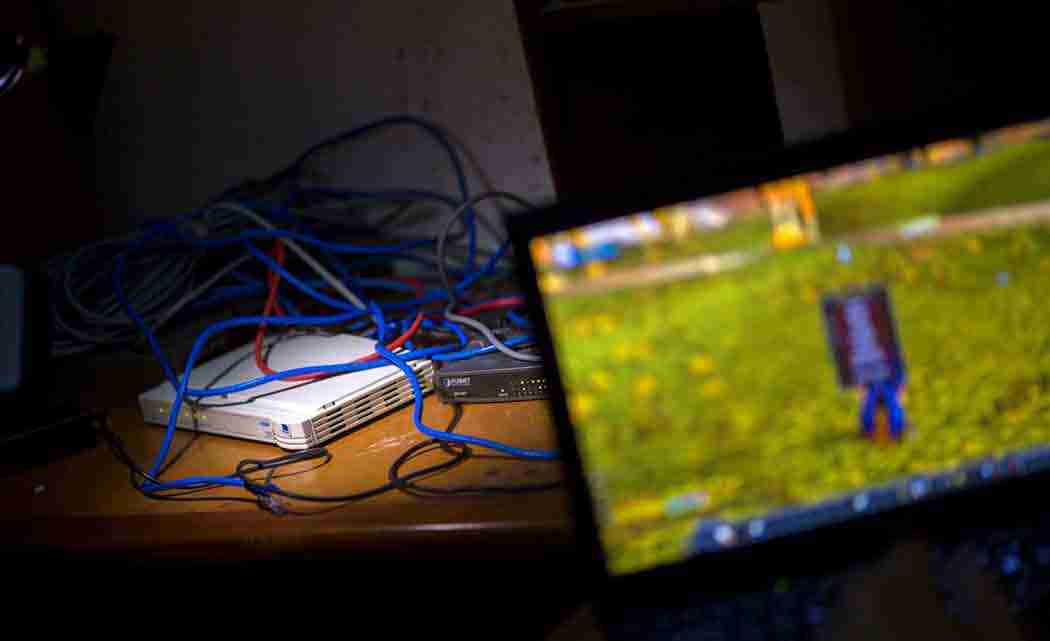
By MICHAEL WEISSENSTEINHAVANA (AP) — Cut off from the Internet, young Cubans have quietly linked thousands of computers into a hidden network that stretches miles across Havana, letting them chat with friends, play games and download hit movies in a mini-replica of the online world that most can’t access.Home Internet connections are banned for all but a handful of Cubans, and the government charges nearly a quarter of a month’s salary for an hour online in government-run hotels and Internet centers. As a result, most people on the island live offline, complaining about their lack of access to information and contact with friends and family abroad.A small minority have covertly engineered a partial solution by pooling funds to create a private network of more than 9,000 computers with small, inexpensive but powerful hidden Wi-Fi antennas and Ethernet cables strung over streets and rooftops spanning the entire city. Disconnected from the real Internet, the network is limited, local and built with equipment commercially available around the world, with no help from any outside government, organizers say.

Hundreds are online at any moment pretending to be orcs or U.S. soldiers in multiplayer online games such as “World of Warcraft” or “Call of Duty.” They trade jokes and photos in chat rooms and organize real-world events like house parties or trips to the beach.

“We really need Internet because there’s so much information online, but at least this satisfies you a little bit because you feel like, ‘I’m connected with a bunch of people, talking to them, sharing files,” said Rafael Antonio Broche Moreno, a 22-year-old electrical engineer who helped build the network known as SNet, short for streetnet.

Cuba’s status as one of the world’s least-wired countries is central to the new relationship Washington is trying to forge with Havana. As part of a new policy seeking broader engagement, the Obama administration hopes that encouraging wider U.S. technology sales to the island will widen Internet access and help increase Cubans’ independence from the state and lay the groundwork for political reform.

Cuban officials say Internet access is limited largely because the U.S. trade embargo has prevented advanced U.S. technology from reaching Cuba and starved the government of the cash it needs to buy equipment from other nations. But the government says that while it is open to buying telecommunications equipment from the U.S., it sees no possibility of changing its broader system in exchange for normal relations with the U.S.

Outside observers and many Cubans blame the lack of Internet on the government’s desire to control the populace and to use disproportionately high cellphone and Internet charges as a source of cash for other government agencies.

Cuba prohibits the use of Wi-Fi equipment without a license from the Ministry of Communications, making SNet technically illegal. Broche Moreno said he believes the law gives authorities latitude to allow networks like SNet to operate. He described a sort of tacit understanding with officials that lets SNet run unmolested as long as it respects Cuban law — its hundreds of nodes are informally monitored by volunteer administrators who make sure users don’t share pornography, discuss politics or link SNet to illicit connections to the real Internet.

“We aren’t anonymous because the country has to know that this type of network exists. They have to protect the country and they know that 9,000 users can be put to any purpose,” he said. “We don’t mess with anybody. All we want to do is play games, share healthy ideas. We don’t try to influence the government or what’s happening in Cuba … We do the right thing and they let us keep at it.”

Users who break rules can be blocked from the network by their peers for as a little as a day for minor infractions such as slowing down SNet with file-sharing outside prescribed hours, with lifetime bans for violations like distributing pornography.

“Users show a lot of respect for preserving the network, because it’s the only one they have,” Broche Moreno said. “But me and the other administrators are watching things to make sure the network does what it’s meant for.”

The Cuban government did not respond to a request for comment on the network.

Before Obama moved to restore full diplomatic ties with Cuba, the U.S. made several attempts to leverage technology against the Cuban government. Contractor Alan Gross was sentenced to 15 years in prison after a U.S. Agency for International Development contractor sent him to Cuba to set up satellite Internet connections. He was freed after five years as part of the deal last month that paved the way for Obama’s new Cuba policy.

A separate USAID contractor tried to build a text message-based social network called Zunzuneo whose brief existence was revealed in an Associated Press investigation last year.

Joining SNet requires resources out of reach of many people in a country where the average salary hovers around $25 a month.

Humberto Vinas, 25, studied medical technology and accounting before finding a relatively well-paying job in the kitchen of a bar. He and nine friends shared an SNet node for several months, running hundreds of feet of Ethernet cable over neighbors’ roofs until one demanded they take it down, disconnecting most from the network.

“I miss SNet a lot,” he said sadly. “You can find out about soccer scores. It allows you to do so much, right from your home.”

Cubans have one of the hemisphere’s highest average levels of education and years of practice at improvising solutions to scarcity, allowing many to access and share information despite enormous barriers. For as little as a dollar a week or less, many Cubans receive what’s known as “the package,” weekly deliveries of pirated TV shows, movies, magazines and instructional texts and videos saved on USB memory drives.

There is no obvious indication the U.S. or any other foreign government or group had anything to do with the creation of SNet, making it by far the most impressive example of Cuba’s homemade telecommunications engineering.

The network is a series of connected nodes, powerful home computers with extra-strong Wi-Fi antennas that communicate with each other across relatively long distances and distribute signals to a smaller network of perhaps a dozen other computers in the immediate vicinity.

SNet started as a handful of connected users around 2001 and stayed that way for a decade. More than 9,000 computers have connected over the past five years, and about 2,000 users connect on an average day.

Many use SNet to get access to popular TV shows and movies. The system also stores a copy of Wikipedia. It’s not necessarily current, but is routinely refreshed by users with true Internet access. There’s also a homegrown version of a social network that functions similarly to Facebook.

Because most data passes from computer to computer in SNet, everything takes place much faster than on the achingly slow and expensive connections available from government servers that pass all information through central points.

Broche Moreno estimated it costs about $200 to equip a group of computers with the antennas and cables needed to become a new node, meaning the cost of networking all the computers in SNet could be as little as $200,000. Similar but smaller networks exist in other Cuban cities and provinces.

“It’s proof that it can be done,” said Alien Garcia, a 30-year-old systems engineer who publishes a magazine on information technology that’s distributed by email and storage devices. “If I as a private citizen can put up a network with far less income than a government, a country should be able to do it, too, no?”


 

Next post Egypt court convicts doctor of female genital mutilation

Previous post Monestime heads Commission

Associated Press

About the Author Associated Press

Related Posts

Black students disproportionately falsely accused of cheating using AI for assignments

David Snelling, August 24, 2026

UK bans under-16s from using social media apps including TikTok and YouTube

David Snelling, June 18, 2026

Miami-Dade unveils plans for first airport-wide digital monitoring hub in U.S.

David Snelling, June 16, 2026

No Comment

Leave a reply Cancel reply

You must be logged in to post a comment.

"Elevating the dialogue"Headline News

South Florida Times

Young Haitian immigrant feared deportation commits suicide

David Snelling, September 3, 2026
News

Late Congresswoman Carrie P. Meek to be honored with historical marker

David Snelling, September 3, 2026
News

Miami-Dade Commissioner Hardemon to join economic mobility summit panel

David Snelling, September 3, 2026
News

General Caine: US military has no plans to send troops to the polls in November

David Snelling, September 2, 2026
National PoliticsNews

Young Haitian immigrant fearing deportation commits suicide

David Snelling, September 2, 2026
News

South Florida Times

The most influential African American weekly newspaper in South Florida

Beatty Media LLC

Follow Us

South Florida Times

3,048
followers
4,966
followers

Videos

South Florida Times

Home values for Black Families

Staff Report, March 23, 2022
Local NewsNewsVideos
Copyright 2026 Beatty Media, LLC.
↑ Back to top