








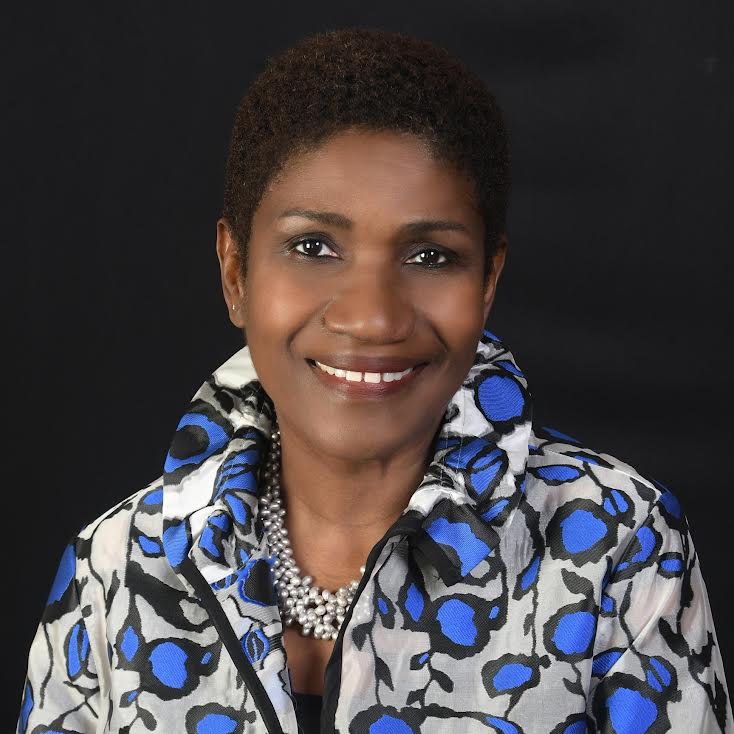
Haitian community activist and founder of Haitian Neighborhood Center Sant La Gepsie Metellus (Photo courtesy of Facebook)
By David L. Snelling
MIAMI – The Miami Foundation’s 11th annual State of the Black Philanthropy honors the contributions of Miami Black diaspora while building a thriving future for African American communities and leadership.
But the May 21 event at Miami’s Little Haiti Culture Complex took on a much deeper meaning, as a rallying cry for equality amid the uproar caused by the anti-Diversity, Inclusion and Equity, (DEI), policy imposed by President Trump.
And Florida’s new law which bans governments and officials from promoting and funding DEI-related initiatives including Haitian Heritage Month and Black History Month.
In words that effectively served as a speech of hope, Miami Foundation’s President and CEO Rebecca Fishman Lipsey said the message is to make a correction.
By not only honoring and celebrating the achievements of trailblazers such as Gepsie Metellus, Roise Gordon Wallace and the late Thelma Gibson.
But to push back on the anti-DEI policy that’s erasing Black diaspora history and depriving the Black community of learning about their culture and heritage.
“We are living in a time of confusion,” she said. “We started the State of Black Philanthropy 11 years ago, started out as a celebration. But the last couple of years, it’s been a rallying cry. Tonight, I hope it’s a correction.”
Lipsey said the event honorees have extraordinary gifts they have given the community and the Foundation will give a Black history lesson on their accomplishments and helped build the city of Miami.
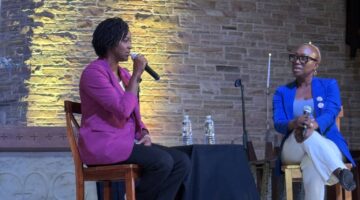
The night was filled with speeches, singing, dancing and storytelling that reflect Miami diaspora and Caribbean culture.
It got emotional when Thamara Labrousse, Executive Director of the Haitian Neighborhood Center Sant La., paid tribute to Metellus, a prominent advocate for the Haitian community for over two decades.
Labrousse, a Haitian American, said she first met Metellus, a teacher at the time, when she was a 14-year-old student at Miami Edison High School.
Labrousse said she pulled the bottom of her T-shirt and tucked into the collar to expose her belly button.
“She saw me in the hallway and took me by the arm,” she said. “I knew I was in trouble.”
Labrousse said Metellus asked her what’s wrong with her shirt?
“And I said nothing,” Labrousse said. “She was graceful, she didn’t embarrass me. She always took the time to teach you a lesson.”
Metellus is a prominent advocate for the Haitian community in South Florida, serving as the co-founder and Executive Director of the Haitian Neighborhood Center Sant La.
Labrousse said Metellus has dedicated over two decades to serving the Haitian immigrant population in South Florida.
She founded Sant La, a neighborhood resource center which provides essential services including social services, education, housing opportunities and access to healthcare and legal services.
Metellus is actively involved in various community organizations and councils, including the Miami-Dade Public Schools Superintendent’s Business Advisory Council and the Miami-Dade School Bond Oversight Committee.
She is also a founding member of the Haitian Women of Miami and the Haitian American Grassroots Coalition.
“Her leadership has been instrumental in advocating for the rights and needs of Haitian-Americans and political refugees,” said Labrousse, who fought back tears while Metellus briefly stepped away on stage after sharing tears as well.”
Roise Gordon Wallace, founder of the Diaspora Vibe Cultural Arts Incubator in Miami, was also honored for her contributions of helping develop and promote diverse talents of emerging artists from the Caribbean and Latin Diaspora.
She showcased their artwork through exhibitions, artists-in-residence, international cultural exchange, education and outreach activities that celebrate Miami-Dade’s rich cultural and social fabric.
DVCAI is an immigrant-facing, afro-descendant organization whose DNA is rooted in a mission-based quest to turn up and operate in the community.
Gordon-Wallace, a Jamaican-American curator, collector, and businesswoman, has spent over 30 years nurturing Caribbean artists and creative communities.
She has created key relationships with international art organizations such as Edna Manley College of the Visual and Performing Arts, the Joan Mitchell Foundation, and Ready Tex Art Gallery, and has served on multiple nonprofit boards.
Gordon-Wallace is also recognized as an arts advocate and community leader, with awards including the Calabash Amadlozi Visual Arts Award and being named one of South Florida’s 50 Most Powerful Black Professionals.
She continues to guide DVCAI’s mission of promoting, nurturing, and cultivating the vision and diverse talents of emerging artists from the Caribbean and Latin diaspora.
The State of Black Philanthropy also paid tribute to longtime Coconut Grove resident and community activist Thelma Gibson who broke racial barriers.
Gibson died in February, 2026 at the age of 99.
She is remembered as a trailblazer and activist who incessantly fought to preserve the Bahamian cultural backbone of the Coconut Grove community.
Bahamian settlers arrived in Coconut Grove, a section in the city of Miami before it incorporated in 1896.
Born to Bahamian immigrants, Gibson advocated for affordable housing and preserving some of the buildings as historic landmarks after developers purchased homes and land in the section of West Coconut Grove.
They initially had planned to build large scale developments such as condos, office buildings and shops, but they listened to Gibson who was heralded for her efforts.
Gibson, who was born on December 17, 1926 in Coconut Grove, where she grew up in a segregated neighborhood known as “Colored Town.”
Despite challenges during segregation, Gibson pursued her education at Columbia University and became a registered nurse specializing in operating techniques.
But during segregation, she was not permitted to work in the operating rooms at Jackson Memorial Hospital in Miami.
Instead, she served in what was then called the “colored wards,” caring for patients with skill and compassion.
In 1964, she made history as the first Black supervisor of nursing at the Dade County Health Department.
Gibson’s career spanned over three decades, during which she served in various health organizations and became a key community leader.
She was instrumental in founding the Women’s Chamber of Commerce of Dade County and the Thelma Gibson Health Initiative, which was designed to improve the lives of people living in low income areas.
Gibson was appointed to the city of Miami Commission on an interim basis in 1997.
Her husband, Theodore Gibson, served on the city commission from 1972 to 1981 and advocated for desegregation and improvements to historically black neighborhoods in Miami-Dade County.

No Comment