










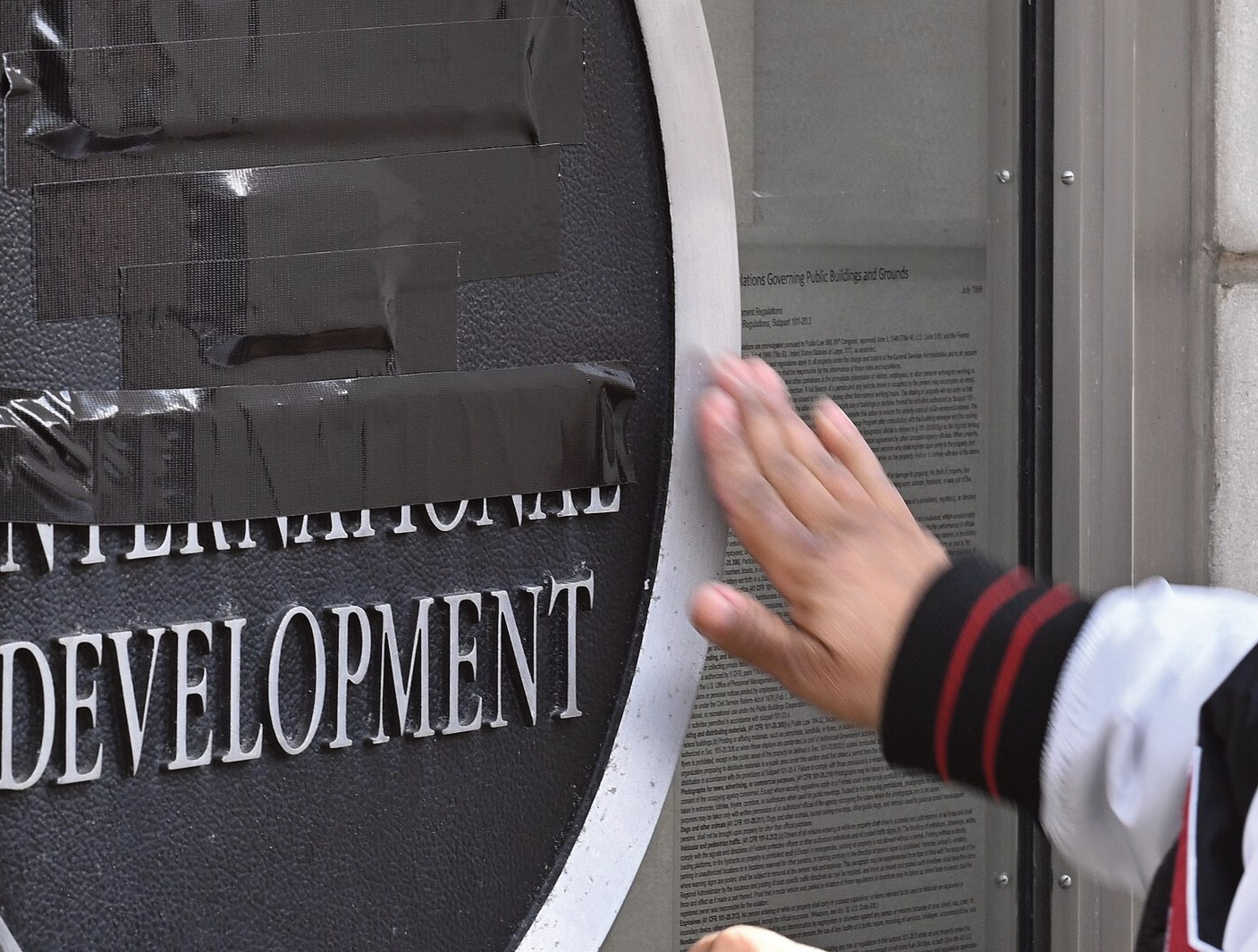
On Wednesday, a divided Supreme Court rejected the Trump administration’s request to keep billions of dollars in foreign aid approved by Congress frozen. Now the lower court will continue to review the matter. PHOTOS COURTESY OF WIKIPEDIA AND STOCK PHOTO
By David L. Snelling
Miami – President Donald Trump’s agenda to slash government spending has targeted the U.S. Agency for Independent Development (USAID) foreign aid program.
Pending a 90-day review, Trump and the Elon Musk-led Department of Government Efficiency (DOGE) cut 90 percent of foreign assistance to countries that desperately rely on funds to fight life-threatening diseases and tackle world hunger.
The Trump administration said it’s blocking roughly $60 billion in overall aid and assistance around the world because America no longer has the desire to be a benefactor.
USAID is designed to safeguard and strengthen U.S. foreign assistance through timely, relevant, and impactful oversight but the cut is causing major fallouts with foreign nonprofit and health organizations.
The quarrel stems from a broken commitment by the U.S. government to provide a large amount of foreign aid to the President’s Emergency Plan for AIDS Relief, which the groups credit for saving millions of lives in Africa and more than 26 million worldwide.
Former Republican President George W. Bush started the aid relief program in 2003.
The biggest impact of the 90 percent cut is felt in Africa.
According to a coalition of health groups in South Africa, the country has a registry of 5.5 million people receiving treatment for HIV, which is the most in the world.
According to Change, a South African health group, while the U.S. only funds 17 percent of South Africa’s HIV program, the cuts to USAID would put the entire program at risk because of how U.S. money helps in critical areas
In a statement, Change said people stricken with AIDS and tuberculosis will not survive past two years without the foreign aid program.
Defunding the program will also affect world hunger, as foreign aid in South Africa helped feed millions of starving families.
“Women and children will go hungry, food will rot in warehouses while families starve, children will be born with HIV, among other tragedies,” the InterAction group, an alliance of NGOs in the United States that work on aid programs across the world, told the Associated Press. “This needless suffering will not make America safer, stronger, or more prosperous. Rather, it will breed instability, migration, and desperation.”
Liz Schrayer, president and CEO of the U.S. Global Leadership Coalition, a nonprofit that promotes U.S. diplomatic and humanitarian efforts, warned that the Trump administration’s move to defund the foreign aid program would cede ground and international influence to China, Russia and Iran.
“The American people deserve a transparent accounting of what will be lost – on counterterror, global health, food security, and competition,” Schrayer said in a statement.
The 90 percent cut in foreign aid also affects Haiti.
Dr. Barth Green, co-founder of Project Medishare for Haiti, said USAID supports 90 percent of the nonprofit’s health programs not only in Haiti but in South Florida as well, which constitutes a large population of Haitian Americans.
Medishare for Haiti, is a local nonprofit organization that provides clinics in Haiti and employs 150 Haitian healthcare workers to care for their fellow country people.
“The impact is being felt, so we wonder what’s going to be the next step to keep people alive and healthy in Haiti,” Green said.
The foreign aid program for Ukraine’s military has been frozen by the Trump administration following a confrontation between the president, Vice President J.D. Vance and Ukraine President Volodymyr Zelensky last week at the White House.
The two sides were discussing a peace deal between Ukraine and Russia and the rare earth mineral agreement when heated words were exchanged.
Trump ridiculed Zelensky over his attire and the debate over peace talks escalated where Zelensky left the White House without a peace deal or the mineral agreement.
Under the President Biden administration, the U.S. was spending roughly $40 billion in foreign aid annually, mostly for its military operation during its conflict with Russia.
The amount is more than the GDP of multiple U.S. states and accounts for four out of every $10 in global humanitarian aid.

No Comment