











NASA Astronaut Victor J. Glover is pilot of the Artemis II
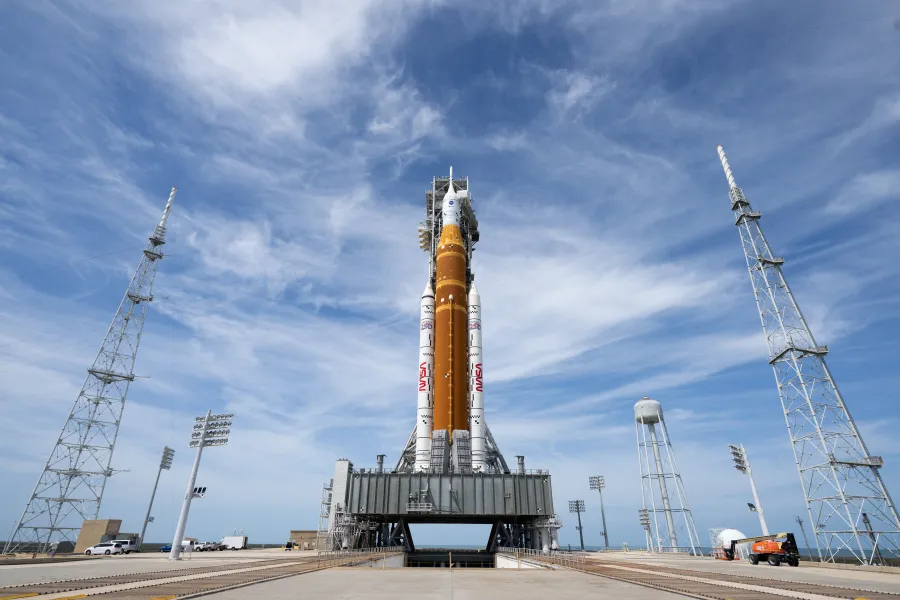
Artemis II Photo Curtesy NASA/Joel Kowsky
Victor J. Glover was selected as a NASA astronaut in 2013 and is currently assigned as the pilot of NASA’s Artemis II mission to the moon. He has previously served as the pilot of NASA’s SpaceX Crew-1 mission to the International Space Station as part of Expedition 64.
Artemis II launch LIVE: NASA rocket is now being loaded with fuel for historic moon mission
Wednesday, April 1, 2026: The Artemis II mission; as NASA makes final preparations to return humanity to the moon.
By Harry Baker, Brandon Specktor, Kenna Hughes-Castleberry, Ben Turner, Patrick Pester
Here’s everything you need to know about the Artemis II mission so far:
- NASA is targeting a two-hour launch window that opens at 6.24 p.m. ET today (April 1). The rocket is currently undergoing fueling.
- The space agency has said there’s an 80% chance of favorable weather conditions to launch Artemis II today. Today’s conditions are forecast to be the best of all the days in the current launch window.
- The April launch windows for Artemis II run from today through to Monday (April 1 to 6), with the potential for a launch on any of those days. After Monday, the next launch window is April 30.
- This window will be NASA’s last chance to launch the rocket on time, as the mission is meant to lift off no later than April 30.
LIVE: Artemis II Launch Day Updates
Live updates for launch of NASA’s Artemis II test flight will be published on this page. All times are Eastern.
9:52 a.m.
The Artemis II launch team transitioned to the fast fill of liquid hydrogen (LH2) for the interim cryogenic propulsion stage, or SLS (Space Launch System) rocket upper stage.
After completing the chilldown phase, this step rapidly loads super-cold LH2 into the SLS upper stage tanks, ensuring the upper stage is fueled and ready to perform its fundamental role of raising the Orion spacecraft into a high Earth orbit ahead of a proximity operations demonstration test and Orion’s translunar injection burn.
Fast fill accelerates the fueling process while maintaining safety, marking another major milestone in the countdown as Artemis II moves closer to liftoff.
9:36 a.m.
The Artemis II launch team has begun the liquid hydrogen chilldown for the interim cryogenic propulsion stage, or SLS (Space Launch System) rocket upper stage.
This process gradually cools the interim cryogenic propulsion stage fuel lines and components to cryogenic temperatures using super-cold liquid hydrogen. The chilldown step is essential to prevent thermal shock and ensure the stage is properly conditioned for full propellant loading. By stabilizing the system at these extreme temperatures, engineers guarantee safe and efficient fueling for the upper stage that will help position Orion into high Earth orbit for its journey toward the Moon.
9:25 a.m.
NASA astronauts Reid Wiseman, Victor Glover, and Christina Koch, along with CSA (Canadian Space Agency) astronaut Jeremy Hansen have officially begun their launch day with a scheduled wake-up call at 9:25 a.m., marking the start of their final preparations for the historic Artemis II mission around the Moon.
9:04 a.m.
The Artemis II launch team transitioned to the fast fill of liquid hydrogen (LH2) into the SLS (Space Launch System) rocket core stage.
After completing the slow fill phase, this step rapidly loads super-cold LH2 into the rocket’s massive tanks, bringing them closer to full capacity. LH2 flows at a much higher rate, reducing overall fueling time while maintaining safety since the system is already thermally conditioned.
Watch live coverage of tanking operations on NASA’s YouTube channel.
8:45 a.m.
During tanking operations, teams transitioned the SLS (Space Launch System) rocket’s core stage liquid oxygen (LOX) system from slow fill to fast fill, rapidly loading super-cold oxidizer into the tank while monitoring for leaks and maintaining proper thermal conditioning.
LOX fast fill safely loads the bulk of the super-cold oxidizer needed for launch, allowing teams to rapidly bring the SLS rocket to flight-ready levels while closely monitoring the vehicle’s health.
8:35 a.m.
The Artemis II launch team initiated the slow fill of liquid hydrogen (LH2) and liquid oxygen (LOX) into the SLS (Space Launch System) rocket core stage.
This phase introduces the super-cold propellants at a controlled rate, allowing the rocket’s plumbing and tanks to gradually adjust to cryogenic temperatures. Slow fill minimizes thermal stress on hardware and ensures a smooth transition before moving to faster fueling stages.
It’s a vital step in the countdown, setting the stage for full tanking operations. Following completion of the slow-fill process for both propellants, teams will transition operations to the fast-fill phase.
Watch continuing live coverage of tanking operations on NASA’s YouTube channel.
7:58 a.m.
The Artemis II launch team is now performing the liquid oxygen main propulsion system chilldown on the SLS (Space Launch System) rocket core stage.
Follow along with live coverage of tanking operations ahead of the Artemis II test flight.
7:44 a.m.
The Artemis II launch team initiated liquid oxygen (LOX) and liquid hydrogen (LH2) transfer line chilldown for the SLS (Space Launch System) rocket core stage.
Chilldown is a critical step in preparing the rocket for safe and efficient fueling, reducing risks and maintaining system integrity. The process gradually cools the rocket’s plumbing and engine systems to cryogenic temperatures using super-cold liquid hydrogen, helping to prevent thermal shock and ensuring the hardware is conditioned for the full flow of propellant during tanking.
Once chilldown is complete, teams will initiate slow fill followed by fast fill tanking operations as they load 700,000 gallons of super-cold liquid oxygen and liquid hydrogen in the SLS core stage.
Below are the as scheduled times for core stage slow and fast fill operations:
- L-9H55M – L-9H25M: Core stage LH2 slow fill start
- L-9H40M – L-9H30M: Core stage LOX slow fill
- L-9H30M – L-6H40M: Core stage LOX fast fill
- L-9H25M – L-8H: Core stage LH2 fast fill
Live coverage of tanking operations is now airing on NASA’s YouTube channel.
7:33 a.m.
Artemis Launch Director Charlie Blackwell-Thompson has given the official “go” for tanking, and NASA teams are ready to start loading propellants into the SLS (Space Launch System) rocket. This essential step kicks off with the chilldown of the core stage liquid oxygen and liquid hydrogen transfer lines, preparing the rocket for its historic mission.
Earlier this morning, engineers at NASA’s Kennedy Space Center in Florida performed the air-to-gaseous nitrogen changeover and cavity inerting, a critical step to ensure crew safety and vehicle integrity. During this phase, atmospheric air inside the rocket’s cavities is replaced with gaseous nitrogen, an inert gas that reduces the risk of combustion and contamination, creating a safe environment for subsequent fueling operations. By displacing oxygen and moisture, engineers maintain the purity and stability of the rocket’s internal systems before cryogenic propellant loading begins.
The launch countdown, which started Monday at 4:44 p.m. EDT, is currently in a built-in hold. This planned pause is a critical checkpoint in the countdown sequence, allowing teams to complete essential tasks and verify system readiness before moving forward.
During this hold, engineers perform final configuration checks, review system health, and ensure all launch criteria are met. It’s also a window for resolving any minor issues without impacting the overall timeline. These holds are standard in complex missions like Artemis II, providing flexibility and confidence as we prepare to send astronauts on a journey around the Moon.
NASA’s launch day coverage begins with live views and audio commentary of tanking operations, as teams load propellant into the SLS rocket, at 7:45 a.m. on NASA’s YouTube channel. Full launch coverage begins at 12:50 p.m. on NASA+, Amazon Prime, and YouTube. Updates during the launch countdown and throughout the mission will be posted here on the Artemis blog.




No Comment