





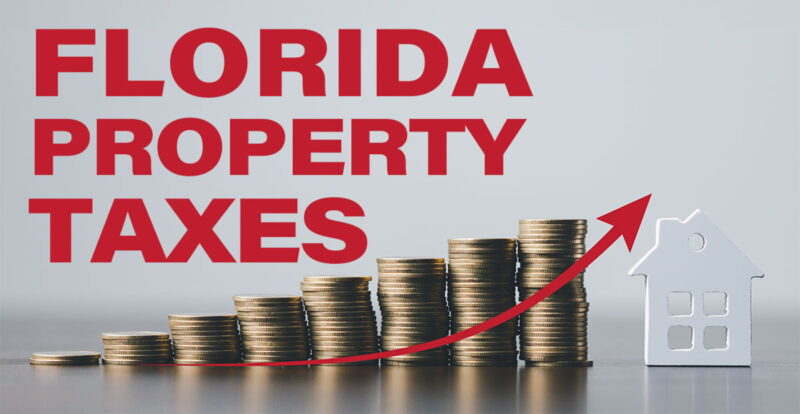
Photo courtesy of npr.brightspotcdn.com
By David L. Snelling
South Florida Times
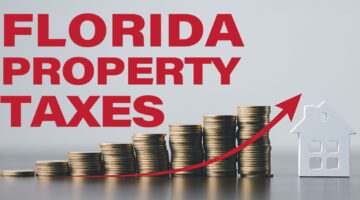
MIAMI – Outgoing Florida Republican Gov. Ron DeSantis is planning to call a special session before he leaves office for the state Legislature to implement property taxes relief legislation after voters approved Amendment 3 during the midterm elections.
About 62 percent of voters approved the property tax relief ballot, 60 percent was needed to pass, to the dismay of local governments that are bracing for millions of dollars in revenue loss and might be forced to make deep cuts to municipal services and layoff their workforce.
Amendment 3 increases homestead exemption to $150,000 in 2027 and $250,000 in 2028.
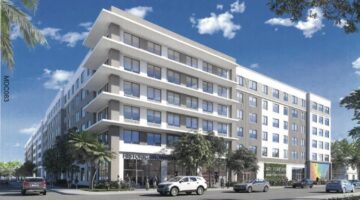
It also lowers the annual assessment cap on non-homestead properties, including businesses, apartment complexes, and second homes, from 10 percent to 5 percent.
Residents’ homes qualify for the homestead exemption increase but people who moved to Florida after December 31, 2026 will have to wait five years to be included for property tax relief.
During the special session, lawmakers are expected to decide how to implement Amendment 3, whether local governments will receive state assistance to offset revenue losses and how to prevent cities and counties from replacing property taxes with new fees.
Local government officials said they might raise fees to replace the lost revenue in their coffers.
DeSantis proposed Amendment 3 after Florida homeowners were hit with increases in property taxes, as some residents were paying as high as $10,000 to their local governments to fund services.
DeSantis said some residents were taxed out of their homes which local governments placed a lien on their properties for delinquent payments and subsequently placed on the auction block.
The governor said the passage of Amendment 3 was inevitable after Florida Financial Chief Blaise Ingoglia performed a series of audits on local governments’ books and discovered millions of dollars in wasteful spending and mismanagement of taxpayers’ dollars.
Government officials disputed Ingoglia’s findings and said the audits were nothing more than political ploy for the Florida GOP and cabinet members to win the November 3, 2026, midterm elections.
Nevertheless, DeSantis said Florida is mandated to carry out Amendment 3 after reaching over the 60 percent voter threshold.
“We’ve got to do it,” DeSantis said during a press conference a day after the election. “It has to be implemented by Jan. 1, per the amendment.”
DeSantis said in just the past seven years, property tax revenues across Florida’s 67 counties have increased nearly 100 percent.
He said local governments are taking in almost twice as much money—far more than inflation and the population has increased.
DeSantis said Florida has experienced significant growth in recent years, driving up property values and local property tax collections.
Property tax revenues across Florida’s 67 counties increased from approximately $32 billion in 2019 to more than $60 billion today.
DeSantis said the state of Florida has reduced its budget four consecutive years and local governments can do the same.
“Amendment 3 now creates a path to full elimination of property taxes for homesteaded Floridians,” he said. “It also provides immediate and meaningful relief for Florida residents by expanding the homestead exemption from non-school property taxes.”
Local governments, police, firefighters and hospitals pushed back on Amendment 3, arguing the property tax cut would be too drastic to absorb without axing essential services.
Miami-Dade County Mayor Daniella Levine Cava, the most vocal critic of Amendment 3, warned the county would lose roughly $300 to $500 million in revenue to fund municipal services and critical infrastructure projects.
Following the passage of Amendment 3, Levine Cava sent a letter to county employees, warning that the amendment will strike “the services residents depend on.
“We know that families across Miami-Dade are struggling with the cost of living, and their desire for relief is undeniable. We also know how much our residents depend on the services we provide every day,” the mayor wrote. “Our responsibility now is to balance the need for financial relief with the obligation to continue serving our community.”
Her letter did mention the possibility of laying off county employees, which local governments do when faced with budget deficits.
Amendment 3 will also hit Florida’s healthcare industry.
Jackson Health System faces a $64 million dollar a year loss, a revenue stream to care for uninsured and underinsured patients.
Jackson Health CEO David Zambrana said the system will lose about $34.7 million in fiscal year 2027 and roughly $29 million more in fiscal year 2028, with the annual loss stabilizing near $64 million after that.
Jackson’s projected loss is part of a broader hit to Florida’s public hospital infrastructure.
A statewide analysis found that the state’s 28 public hospital and healthcare taxing districts could collectively lose $323 million over three years if Amendment 3 passes, according to the Florida Policy Institute.
Four South Florida systems — Jackson, North Broward Hospital District, South Broward Hospital District, and the Health Care District of Palm Beach County — would together absorb more than 70 percent of that statewide loss.
Florida law enforcement departments seemed split when Amendment 3 was placed on the ballot.
Some sheriffs offices supported property taxes relief while others opposed it since it could slash their budgets, fewer deputies and impact police services.
Nonetheless, they remain committed to maintaining services while local governments access the effects of Amendment 3.
Miami-Dade County Sheriff Rosie Cordero-Stutz said she supports Amendment 3 because Florida homeowners deserve property tax relief.
“As I have said publicly, tax relief and public safety are not competing priorities,” she said.
Cordero-Stutz said her office reduced its annual costs by $12 million this year to help provide relief for taxpayers.
“Every government agency has a responsibility to examine its expenses and ensure taxpayers receive the best possible value,” she said “As Sheriff, I will continue protecting the resources our deputies need to keep our community safe while holding our spending to that same standard.”
Incoming Florida Republican Governor Byron Donalds said slashing property taxes for homeowners was the centerpiece of his campaign against Democratic rival David Jolly.
Donalds, who will become the first Black Florida governor when he takes office in January 2027, ran on a promise to continue the legacy of his predecessor, DeSantis.
Keep reading for free
You can unsubscribe from the newsletter at any time.

No Comment