







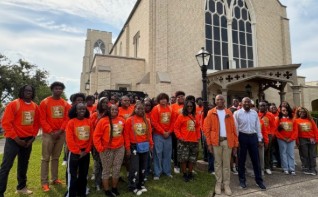
MIAMI GARDENS, Fla. – A local group of high school students spent their Spring break touring some of the most Civil Rights landmarks through the south.
Louisiana was at the heart of the Civil Rights Movement as Blacks and whites clashed over equality including voting rights and diversity in the sheriff’s department.
Miami-Dade County Commissioner Oliver G. Gilbert III sponsored the tour to give students an eye-opening journey through Louisiana to explore the state’s rich, deep-rooted history and last impact on the Civil Rights Movement.
Throughout the week, students visited historic landmarks, engaged in meaningful discussions, and connected with the powerful stories of civil rights leaders and communities.
The tour provided a hands-on learning experience that brought history to life, encouraging students to think critically about social justice, civic responsibility, and their role in shaping the future.
“Seeing history up close and learning from these powerful stories gives our students a perspective they simply cannot get in a classroom,” said Gilbert. “I am proud of each student for embracing this experience, and I hope it inspires them to become leaders in their own communities.” The Spring Break Expedition Civil Rights Tour 2.0 reflects the Commissioner’s ongoing commitment to youth development, education, empowering, and exposing students to experiences that broaden their perspectives.
Racial tension was at an all-time high in Louisiana during the 1960s after the 1964 Voting Rights Act was passed.
According to historians, a motorcade of members of the Klu Klux Klan rode through Black neighborhoods, shouting racial slurs, threatening violence and throwing objects at Black people’s homes and cars.
Blacks in the area had enough and then came the birth of the Deacons for Defense and Justice in Louisiana, a group of African Americans who took turns guarding their neighbors’ homes with shotguns.
The Klan never returned to the neighborhood.
In 1965, the Klan allegedly struck again but this time it was the death of a Black law enforcement officer.
Oneal Moore, who was 34 at the time, was the first Black deputy sheriff for the Washington Parish Sheriff’s Office in Varnado, Louisiana when he and his partner were ambushed by a group of white men in a pick up truck.
Moore was shot dead and his partner survived the attack but lost sight in one of his eyes.
No one was ever arrested in connection with Moore’s murder though the FBI received tips the KKK was responsible, which the group denied.


No Comment