










Photo courtesy of Bing.com
By David L. Snelling
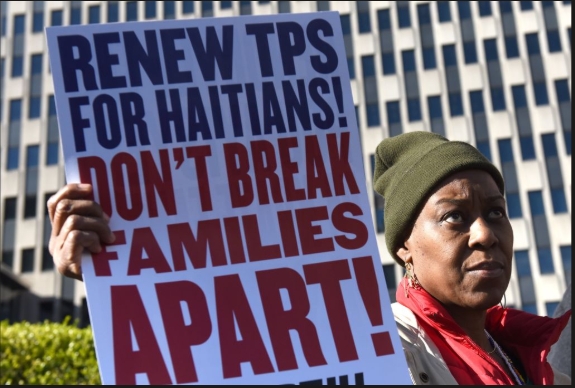
MIAMI – The U.S. Supreme Court gave the President Donald Trump administration the green light to end Temporary Protection Status (TPS) for 350,000 Haitians nationwide, dealing a devastating blow to migrants who were allowed to live and work in America until the conditions in their home country improve.
The 6-3 decision by the highest court in the nation gave Trump his biggest victory on immigration which allows the federal government to deport Haitians if they refuse to voluntarily return to Haiti in the case of Millin vs. Doe.
The United States Department of Homeland Security has launched efforts to begin removing Haitians who fled their home country due to the escalating gang violence and political upheaval.
The impact is felt in the South Florida community which is home to the largest Haitian population in the country, as they face imminent danger if they return to Haiti.
The Caribbean nation has drifted into a whirlpool of anarchy since the 2021 assanination of President Jovenel Moise.
The gang violence has grappled Haiti, which is responsible for thousands of deaths, rapes, seizing homes and police stations and cutting off critical medical supplies and humanitarian aid.
The growing violence of armed gangs and the country’s political instability have led several governments to issue the highest-level travel warnings against visiting Haiti.
Haitians’ future is now uncertain after the Supreme Court’s decision, as many sought legal help and humanitarian advocacy to determine any options to stay in the U.S.
The Supreme Court dashed their hopes by ruling in favor of the Trump administration to terminate TPS for Haitians and 6,000 Syrians living in the U.S.
The Court’s conservative majority concluded that the Department of Homeland Security (DHS) has broad discretion to end TPS designations when it determines that country conditions no longer meet statutory criteria, and that courts generally cannot review these decisions for non-constitutional claims.
Justice Samuel Alito wrote the majority opinion, rejecting claims that the termination was racially motivated, while Justice Elena Kagan and the three liberal justices dissented, citing procedural and racial concerns
The Court emphasized that the TPS statute bars judicial review of most determinations regarding designation, extension, or termination.
Alito noted that plaintiffs’ claims of racial animus were insufficient because the administration provided a race-neutral explanation: the current administration opposes the TPS program as implemented in the past.
The ruling also reversed lower court decisions that had blocked the termination, including findings that former DHS Secretary Kristi Noem had acted with racial bias.
South Florida Democratic leaders are rallying to the defense of Haitians in an effort to keep their TPS intact despite the Supreme Court’s ruling.
The only hope left for Haitians is an TPS extension resolution passed by Congress in April 2026 in which Republicans broke ranks to side with Democrats.
The resolution is waiting for the Senate’s approval before the recess begins next month.
The Senate, however, remains a tougher road.
Any bill will need 60 votes to advance, a high bar even with leadership support.
Retiring U.S. Rep. Frederica Wilson, whose district constitutes a large Haitian population, said she is stepping up efforts to protect Haitians from deportation.
Wilson announced she’s sponsoring the Haitian Refugee Immigration Fairness Act of 2026 to grant Haitians permanent legal status in the U.S.
“Haitian families deserve more than a lifetime of uncertainty. My bill creates a pathway to permanent residency, keeps families together, and provides lasting security,” Wilson said in a statement. “Haitian families deserve to live without fear of being separated from the country they call home. I will not stop until that becomes a reality.”
State Rep. Ashley Gantt said she reached out to Florida Republican Senators Rick Scott and Ashley Moody and urged them to
push the Senate to vote for the TPS extension for Haitian migrants.
“Following today’s Supreme Court decision, thousands of Haitian families in Florida face the possibility of losing their legal status, their jobs, and the homes and communities they have built over many years,” she said in a statement. “These are our neighbors, our coworkers, our church members, and our friends. They followed the law, renewed their status, paid taxes, and contributed to our state.”
U.S. Congressional candidate and former State Senator Shevrin Jones said the Supreme Court’s decision puts the lives of Haitians in peril if they are forced to return to the Caribbean island.
“Absolutely unacceptable,” Jones said in a statement. “TPS was created to protect people from being forced back into crisis — not to be used as a political weapon. We stand with Haitian families, workers, parents, and children who have built their lives here and now face an uncertain future. This fight is not over.”
Miami-Dade County Commissioner Marleine Bastien, a Haitian American who also works with Haitian advocacy group, the Family Action Network Movement, said ending TPS for Haitian migrants can impact the U.S economy.
“These individuals are not strangers, they are our friends, neighbors, coworkers, healthcare workers, teachers, entrepreneurs, and essential members of our communities,” she said. “The impact of this decision will

No Comment