









Photo courtesy of Coastalangiemag.com
By JOSHUA GOODMAN, HELEN WIEFFERING, SHELBY LUM Associated Press
ST. AUGUSTINE, Fla. (AP) — Miles from shore, Chris Kemp pumps and reels as he battles a fish 150 feet below.
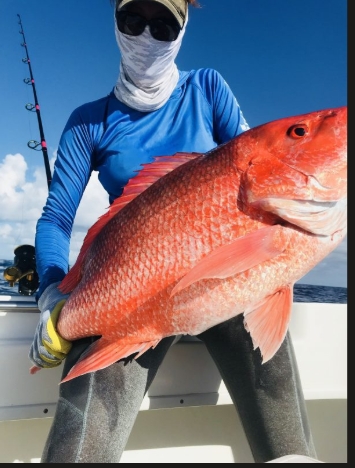
Eventually, it gives up, and the 10-pound red snapper is hauled aboard the Jodie Lynn II. There’s barely time to rejoice.
As Kemp raises his trophy for a picture, the charter boat’s captain rushes over and then drives a knife-like tool into the fish’s gas-filled bladder.
The procedure, required by federal law, is intended to improve the fish’s chances of survival after release.
“Send it overboard,” orders the captain.
And with that, Kemp’s hopes of bringing the fish home to eat was lost.
Recreational fishermen like Kemp are pitched against commercial fishermen and environmentalists in a legal dispute that has halted what was expected to be the longest snapper season in years, reflecting broader tensions over the Trump administration’s efforts to loosen fishing rules and deregulate the seas.
As part of those efforts, the National Oceanic and Atmospheric Administration in May exempted states from some restrictions under the Magnuson-Stevens Act, the landmark law that guides fisheries management.
But the decision was halted at the last minute by a federal judge in Washington who blocked the plan.
The Atlantic red snapper is known for the way social media algorithms push harmful content to young people.
“This is far too easy to work around. It is based on age verification tools that have been shown to be ineffective to date,” said Kate Edwards, head of education at the Molly Rose Foundation, which was set up in memory of 14 year-old Molly Russell, who took her own life after being exposed to self-harm content online.
“It does nothing to address the actual problem itself, the harmful algorithms, the harmful content that is existing on those platforms,” Edwards added.
A Meta statement said it shares “the goal of keeping teens safe online,” and that it now features teen accounts to automatically limit who can contact them and the content they see.
“Like others, we don’t think bans will be protected.
U.S. opposes the move The ban could further inflame tensions with the U.S., which has warned that regulations should be narrow and not violate free speech protections, according to a statement from the U.S. Embassy in London.
It said it was also concerned that regulations would place greater burdens on American technology companies.
Starmer said he expected to discuss the issue with U.S. President Donald Trump and other world leaders at a Group of Seven summit in France that starts Monday.
After decades of over fishing, regulators in 2010 restricted recreational fishing to only a handful of days each year — when not banned altogether. Starting last year, Florida Gov. Ron De Santis led a charge with officials in Geor gia, North Carolina and South Carolina to take over management of the recreational Atlantic snapper fishery, casting the effort as guaranteeing anglers’ “God given right to fish.”
In May, NOAA issued special permits exempting the states from some legal requirements to protect fish. Instead of imposing wholesale fishing bans on bottom fishing each winter, as NOAA had proposed last year, the agency set up an Atlantic snapper season in four states ranging from 39 to 62 days, allowing anglers to keep one fish per day.
“We were excited,” said Kemp, who booked a charter to coincide with the season’s opening day. Court battle pits recreational anglers against commercial fishermen.
The conflict landed in court just before the season was about to begin May 22, and U.S. District Judge Rudolph Contreras issued an injunction based in part on environmental concerns.
He relied on estimates from the nonprofit Ocean Conservancy suggesting recreational catches could reach up to 485,000 in Florida alone during the expanded season — 20 times the number of landed catch allowed. Kemp learned about the judge’s order from a text message sent by a friend while driving to the marina.
“Originally we thought it was a joke, given the severity,” said Kemp.
The ruling sparked immediate backlash.
Florida wildlife officials denounced the decision as the work of a “rogue federal judge,” while some fishermen involved in the lawsuit reported receiving threats after DeSantis falsely accused them of trying to command deer the quota all for themselves.
One of the plaintiffs, North Carolina fisherman Jeff Oden, said commercial fishermen are struggling to survive amid rising costs and competition from imported seafood.
He worries that expanded recreational harvests could leave too few snap per available when the commercial season begins later this year.


No Comment