







U.S. Rep. Byron Donalds wins GOP nomination for Florida governor (All pictures courtesy of Facebook)
By David L. Snelling
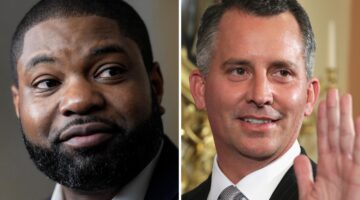
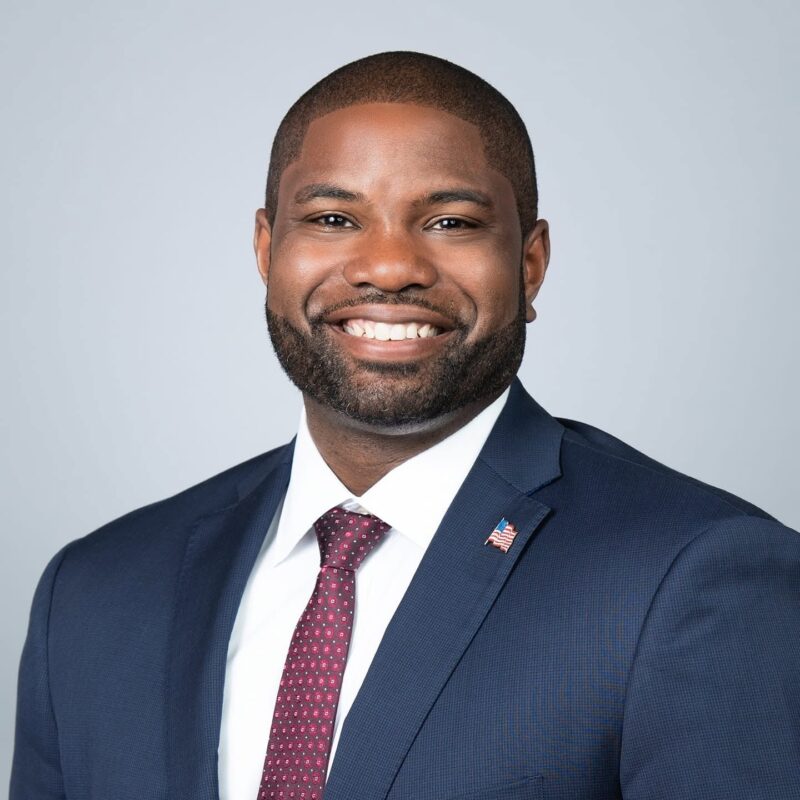
U.S. Rep. Byron Donalds is poised to make history as the first Black governor of Florida, winning the Republican primary by a landslide and setting up a showdown with Democrat candidate and former U.S. Rep. David Jolly who picked up his party’s nomination heading into November.
The winner will replace Florida Republican Gov. Ron DeSantis who is term-limited this year.
Buoyed by an endorsement from President Donald Trump, Donalds, a Republican from Southwest Florida, collected 50 percent of the vote to secure the GOP nomination, winning over Lt. Governor Jay Collins (25 percent) former Speaker of the Florida House of Representatives Paul Renner (8 percent) and American investor and former hedge manager James Fishback (10 percent).
During his victory speech in Orlando, Donalds thanked his supporters and campaign team.
“You guys knocked on thousands of doors taking our message to Florida,” he said. “Because of the sweat and hard work, we have won a massive victory. The primary is over and the other Republican candidates in the race, we have put our differences aside and are focusing on November. We are one Republican party.”
In his gubernatorial bid, Donalds touted Trump’s endorsement and said his political platform aligns with the president’s Make America Great Again agenda including emphasizing school choice, parental rights, economic growth, public safety and environmental protection.
Donalds said he supports Trump’s war with Iran, arguing that preventing a nuclear Iran outweighs the country’s general aversion to foreign conflict.
The war reached its sixth month, and the 60-day Iran peace deal deadline is expiring, as gas prices continue to rise, forcing families who are struggling to make ends meet to choose between driving and food.
“Nobody wants war. I think if you were going to ask Americans at large, whether they’re MAGA Republicans or any other American, nobody wants to be involved in another military conflict,” Donalds said during an interview with News Nations last week.
Both Donalds and Collins were seeking DeSantis’ endorsement but the governor decided not to support any candidate reportedly to prevent a proxy war with Trump if he chose the lieutenant governor.
Donalds and DeSantis had become estranged within the GOP since he launched his bid for governor.
Donalds outraised his opponents with a war chest of $81.1 million, according to his campaign finance reports, as Collins racked in over $10 million.
In the Democratic primary, Jolly ran away from the pack with 62 percent of the vote, beating Broward County teacher and entrepreneur Dayna Foster (15 percent) state Rep. Dottie Joseph from North Miami (9 percent), Evelyn Castillo-Bach (8 percent) and Elroy Thomas Fernandez (7 percent).
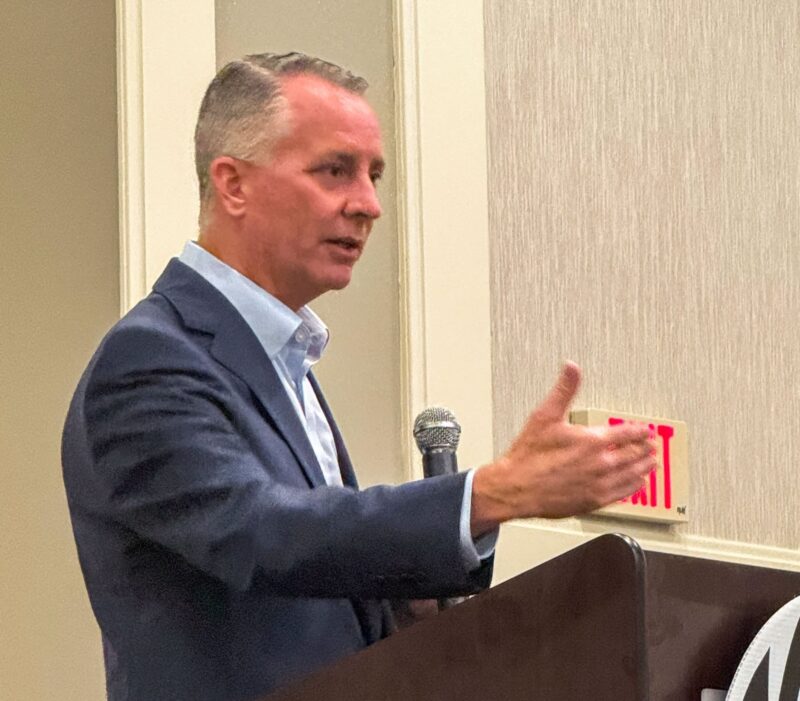
Jolly, a Republican turned Democrat after being Trump’s most vocal critic in the GOP during the president’s first term, chose former U.S. Rep. Gwen Graham to be his running mate.
Graham, the daughter of former Florida Governor and U.S. Senator Bob Graham, unsuccessfully ran for governor in 2018.
During his victory speech in Miami Lakes, Jolly said he and other Democrats are ready to take back Florida from the Republicans who have placed a stranglehold on people’s rights.
“Our nation is broken, our nation is in a crisis,” he said to his cheering supporters. “We are more divided than ever before. This is a moment where we are supporting each other. The strength of people and our values are holding us together.”
Jolly states that he is pro-choice having shifted his position on the issue after leaving the Republican party and he supports Florida restoring reproductive freedom and codification of the Roe v. Wade and Casey v. Planned Parenthood framework.
He said that having grown up in an evangelical household as the son of a preacher, he had previously conflated being religious with opposing Roe.
He affirmed his belief and change in perspective that abortion rights should be protected by law adding that if elected governor, he would introduce legislation to codify abortion rights.
In July 2025, he was endorsed by the leaders of Florida’s pro-choice movement, including Graham, who wrote that they trusted him and his change in perspective.
Democrats are optimistic they can win the governor’s seat in almost 30 years with Jolly; they came close in 2018 when former Tallahassee mayor Andrew Gillum narrowly lost to DeSantis.
Jolly, so far, has raised over $4 million for his gubernatorial bid.
In other local races:
For the U.S. Senate, state Rep. Angle Nixon, who was arrested for staging a sit-in at DeSantis’ office over the GOP-led mid-decade redistricting vote, won the Democratic nomination over Alex Vinman.
Nixon won with 54 percent of the vote to Vinman’s 47 percent.
Vinman is retired United States Army lieutenant colonel who served as the Director of European Affairs for the National Security Council.
He came to national attention in 2019 as a witness in Congress’s impeachment inquiry into Donald Trump during the Trump–Ukraine scandal.
Nixon has been criticized by fellow Democrats for using a bullhorn during the redistricting vote but apparently put their differences aside to prepare for November’s general election.
Nixon will take on Republican U.S. Senator Ashley Moody, the former Attorney General who was appointed to replace Marco Rubio after he was chosen Secretary of State, in November.
Moody won the Republican nomination with 80 percent of the vote.
Another anticipated race was the U.S. Congressional District 24, as 10 candidates sought to become the successor of U.S. Rep. Frederica Wilson, who’s retiring.
Former Miami-Dade County Commissioner Oliver Gilbert is one step away from earning that distinction after winning the Democratic primary.
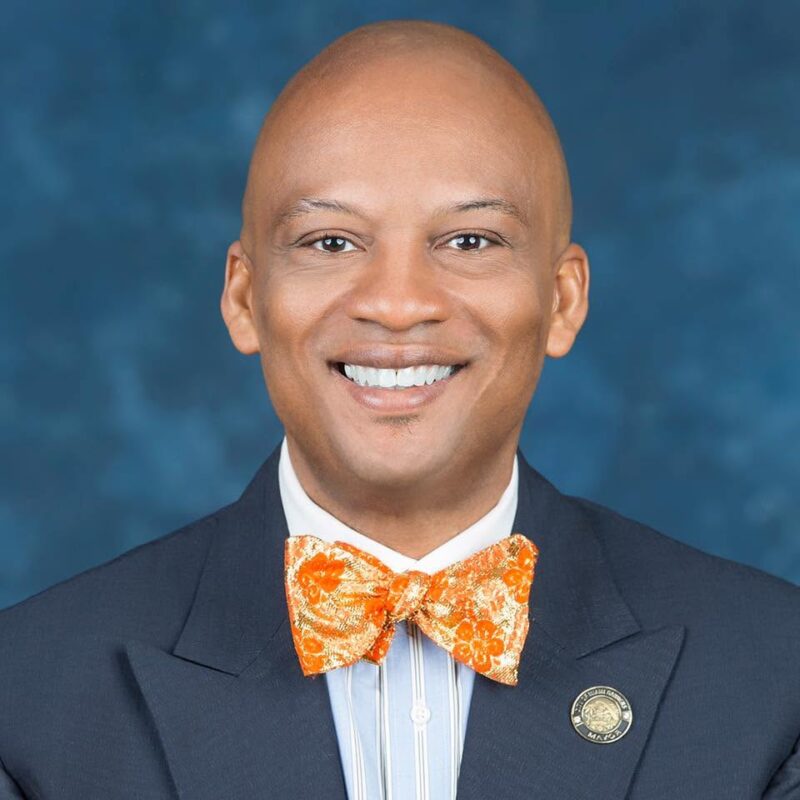
Gilbert emerged victorious in a crowded field of candidates and most likely will win the general election against Republican Mayonna Te Brown since the district is Black-majority and Democratic stronghold.
In a close race between two front runners, Gilbert captured 34 percent of the vote while former state Senator Shevrin Jones won 32 percent, while attorney Kendrick Meek II captured 17 percent.
Meek, whose family has deep political roots in South Florida, was seeking to continue the legacy of his grandmother, former U.S. Rep. Carrie Meek, and his father, Kendrick Meek, who won his mother’s seat after she retired from Congress.
Also, other candidates included former Miami-Dade County Commissioner Jean Monestime, who picked up 5 percent of the vote, doctor/lawyer Rudolph Moise (8 percent) attorney Roderick Vereen ( 1 percent) and Marshall Davis Sr., longtime director of the Miami-Dade Cultural Heritage Arts and Performance Center in Liberty City which was named after him (3 percent).
Gilbert’s victory was also a win for Wilson who endorsed him by literally passing him the torch on stage in Miami Gardens.
Gilbert said he’s ready to fight for his constituents against Trump and his billionaire allies in Washington.
“This is not about me, it’s about us,” Gilbert said during his victory speech. It’s about us and how we are going to change this country around.”
Gilbert thanked Wilson for her endorsement and decades of leadership in Congress.
“Congresswoman Wilson is so special,” he said. “I’ an grateful for her leadership, support and advice.”
Jones conceded during his speech at Miami Shores Country Club, thanking his parents and supporters for his political career.
“Thank you, mom and dad, for showing me what leadership looks like,” Jones said. “We didn’t get the results we wanted but to all the volunteers, you all built a movement that we are not getting rid of. We will keep that fire.”
Jones said he will support Gilbert for the general election in November.
Both Gilbert and Jones’ campaigns were hit with last-minute negative attacks.
Gilbert has been targeted by Protect Progress, a pro-crypto PAC, and by American Made PAC, which is connected to his own campaign, in separate ad campaigns aimed at other candidates in the race.
The ads cited fabricated Miami Herald headlines to portray him as a Trump-aligned figure supporting mass deportations.
In reality, the Herald articles referenced in the ads did not focus on Gilbert and were unrelated to his positions
The campaign for Jones was hit with a homophobic attack when someone circulated a text message that said Jones was HIV positive by Equality Florida after he was turned away from giving blood during the COVID-19 pandemic.
Gay and bisexual men were prohibited from donating blood at the time but the regulation has since changed.
Jones denied he’s HIV positive.
Equality Florida, a statewide civil rights organization dedicated to securing full equality for Florida’s LGBTQ community, who was accused of sending the text, denied it.
In fact, the group endorsed Jones, who is openly gay.
CD 24 covers areas including unincorporated Miami-Dade County, Miami Gardens, Opa-locka, and Broward County’s Hollywood, Miramar and Pembroke Park.
And for the first time in over 34 years, Congressional District 20 has lost Black representation, as U.S. Rep. Debbie Wasserman Schultz picked up the victory for the Democratic nomination despite facing backlash from Black political leaders.
Wasserman Schultz won 47 percent of the vote, with former Broward County mayor Dale Holness finishing second with 22 percent.
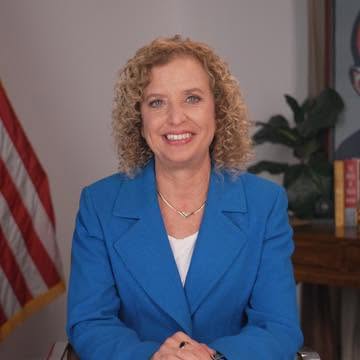
Teacher and community activist Elijah Manley earned 13 percent and former U.S. Rep. Sheila Cheriflus McCormick picked up 9 percent of the vote.
Rap pioneer Luther “Uncle Luke” Campbell picked up 5 percent.
The open seat has been represented by Alcee Hasting and McCormick since 1992 but Wasserman Schultz chose to run for the Black-majority seat after DeSantis and the GOP-controlled Legislature redrew her district.
The new map placed District 25 in a Republican stronghold.
McCormick, Holness, Campbell and Manley all blasted Wasserman Schultz’s decision to run in a historic Black district.
McCormick won the seat over Holness in 2022 to replace Hastings who died.
She resigned from political office this year to avoid facing sanctions by Congress tied to her federal indictment on COVID-19 pandemic relief funds.
McCormick got back in the race asking voters to return her to Congress despite her legal troubles.
CD 20 covers portions of Broward and Palm Beach counties.
For Senate District 34, state Rep. Ashley Gantt, who is term-limited this year, won the Democratic nomination and faces Republican Elizabeth Jeanty in November.
Gannt, a lawyer by trade, picked up 63 percent of the vote, over Shannan Ighodaro (21 percent), Christine Alexandria (16 percent) and Olivo Jules-Sanon.
For State Representative District 108, Daphne Campbell picked up the Democratic nomination with 47 percent of the vote, while community activist and business owner Dinah J. Escarment won 41 percent, and Peter Walsh earned 12 percent.
Campbell, a former state Rep. and senator, will face Republican candidate Wancito Francius, who ran unopposed, in November.
After a four-year hiatus, former longtime state Rep. James Bush is headed back to Tallahassee after he captured 49 percent of the vote over Satin Fye (10 percent), John Taylor (32 percent) and Broadway Harewood (9 percent).
In 2022, Gantt upset then-incumbent Bush and defeated him again in the rematch two years later.

No Comment