








Photo courtesy of elevateblackhealth.com
By David L. Snelling
South Florida Times
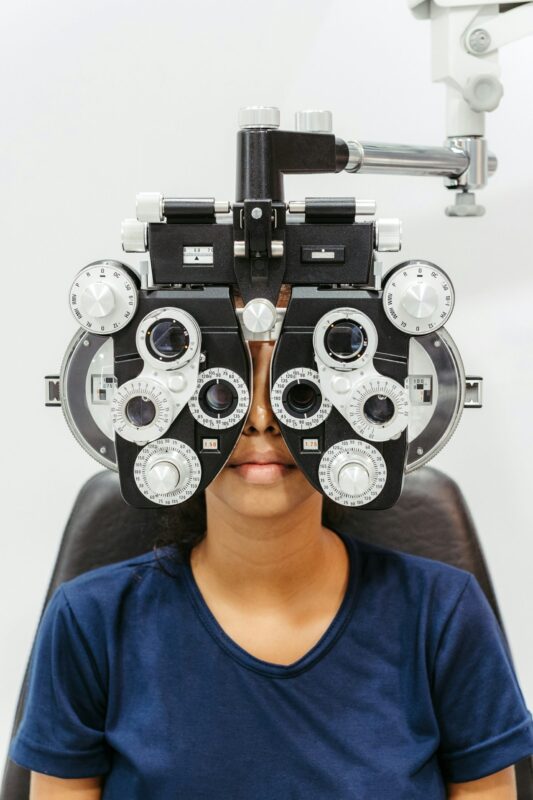
MIAMI – Blacks are at a higher risk of developing glaucoma, an eye disease that can damage the optic nerve and could lead to blindness if not detected and treated in its early stages, according to the Glaucoma Research Foundation.
Medicare does cover screening for glaucoma, but federal law doesn’t uniformly require an examination for the eye disease coverage across Medicaid, private health plans and the Federal Employees Health Benefits Program.
Glaucoma is known as the “silent thief of sight” because it usually has no symptoms in the early stages, making regular eye exams crucial for early detection.
According to the Mayo Clinic, there are different types of glaucoma, including open-angle and angle-closure glaucoma, each with its own causes and risk factors.
If left untreated, glaucoma can result in permanent vision loss.
Treatment options may include medications, laser treatment, or surgery to lower eye pressure and prevent further damage.
Regular monitoring and early intervention are key to managing this condition effectively.
Retiring U.S. Rep. Federica Wilson (D-Miami) is advocating for glaucoma screenings expansion and treatment for underserved communities.
Wilson is sponsoring the Glaucoma Vision Act of 2026 to bring awareness to the eye disease and investing in research to protect and restore vision.
Wilson said roughly 4.22 million Americans were suffering from glaucoma in 2022, and about half of them are unaware.
“Glaucoma can steal a person’s sight before they even know they have it,” she said. “By the time symptoms appear, the damage may be irreversible.”
Wilson said a screening could change the course of someone’s life, but too many people face gaps in coverage or cannot afford the care they need.
“My bill would help families detect glaucoma earlier, get treatment sooner, and hold on to the independence that comes with their sight,” she said.
Wilson didn’t mention if she has ever suffered from glaucoma but news reports suggested she had major eye surgery this year that caused her to miss 57 roll call votes from April 20, 2026 to May 20, 2026.
Key provisions of the Glaucoma Vision Act of 2026 is to expand screening coverage across major healthcare plans.
The bill would require glaucoma screening coverage for eligible people with private insurance, Medicaid, and Federal Employees Health Benefits coverage.
It would also eliminate applicable Medicare Part B cost sharing for screenings furnished to eligible people.
The coverage provisions would take effect in 2027.
Wilson’s bill targets people with a higher risk of developing glaucoma including Blacks, Hispanics and Asians, especially those who were diagnosed with diabetes, a family history of glaucoma, elevated eye pressure, myopia, certain blood pressure conditions, or chronic corticosteroid use.
The bill will also require bringing screenings and treatments to underserved communities.
Through the Centers for Disease Control and Prevention’s Vision Health Initiative, the bill would establish competitive grants for free or low-cost screenings and follow-up treatment for uninsured and underinsured people at high risk.
Grants could also support community education, mobile screening units, care coordination, and disease surveillance, Wilson said.
Projects serving racial and ethnic minority communities and other underserved populations with a high burden of vision loss would receive priority.
The bill authorizes $10 million for these activities across fiscal years 2027 and 2028.
“No one should lose their sight because glaucoma went undetected. The Glaucoma Vision Act of 2026 would expand screening coverage, invest in community detection programs, and support vital research to improve treatment and prevent vision loss. The Academy applauds Representative Wilson for introducing this important legislation and advancing eye health for all Americans,” said Michael Repka, MD, MBA, Medical Director for Governmental Affairs, American Academy of Ophthalmology.
Wilson’s legislation also addresses the critical public health issue by increasing access to early glaucoma screening and investing in public health and research.
The initiatives aim to protect vision, maintain independence, and mitigate the long-term personal and economic effects associated with this silent, irreversible disease.
Prevent Blindness praises Wilson’s efforts to promote early detection, preserve sight, and improve the “health and well-being of our communities,” said Karen Allison, MD, MBA, FACS, Associate Professor of Clinical Ophthalmology at the Flaum Eye Institute, University of Rochester Medical Center; Prevent Blindness Board of Directors member; and Prevent Blindness Public Health & Science Committee Co-Chair.
Cosponsors of this bill are Reps. Joyce Beatty (OH-3), Sanford Bishop (GA-2), Troy Carter (LA-2), Yvette Clarke (NY-9), Emanuel Cleaver (MO-5), Jasmine Crockett (TX-30), Lois Frankel (FL-22), Adelita Grijalva (AZ-7), Jonathan L. Jackson (IL-1), Robin Kelly (IL-2), Lucy McBath (GA-6), Jennifer McClellan (VA-4), LaMonica McIver (NJ-10), Christian D. Menefee (TX-18), Kweisi Mfume (MD-7), Jerrold Nadler (NY-12), Terri Sewell (AL-7), Brad Sherman (CA-32), Shri Thanedar (MI-13), Bennie Thompson (MS-2), Nydia Velázquez (NY-7), Maxine Waters (CA-43), Bonnie Watson Coleman (NJ-12), and Nikema Williams (GA-5), as well as Del. Eleanor Holmes Norton (DC-AL).


No Comment