










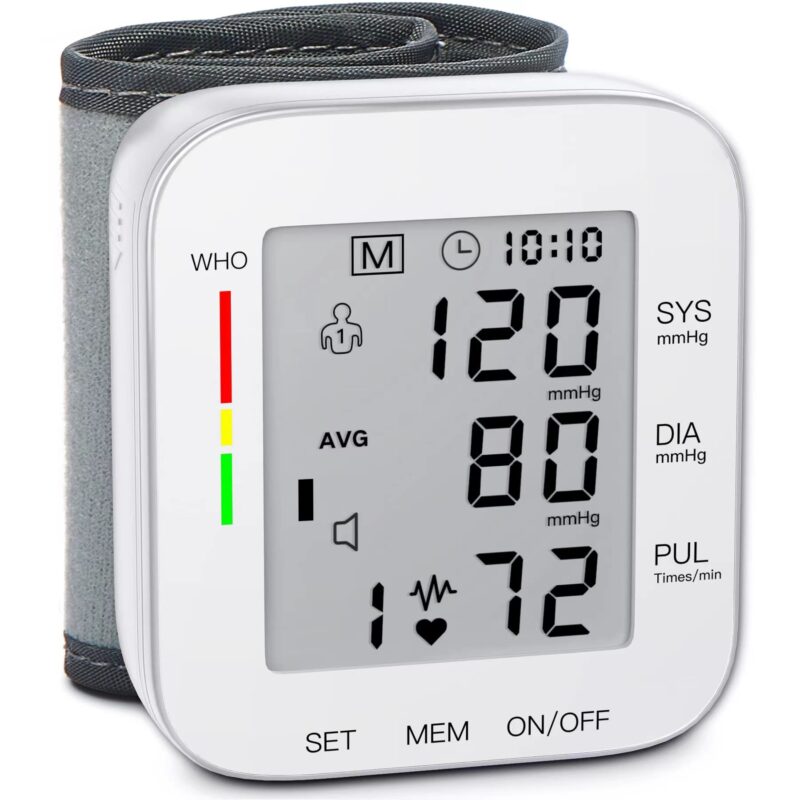
Photo courtesy www.nellisauction.com
Hypertension, also known as high blood pressure, impacts millions of people worldwide.
If not treated, hypertension could damage blood vessels for years, increasing the risk of a heart attack, stroke, kidney disease and other health problems.
Most doctors prescribed their patients with high blood pressure medication to get the condition under control and recommend a healthy diet including consuming more fruits and vegetables, limiting sodium intake, high cholesterol and saturated fats foods, cut out smoking and limit alcohol.
Regular physical activities also play a major role in keeping your blood pressure low.
But some people get confused over the two numbers on a high blood pressure machine to measure the condition of the heart.
The top number, called systolic pressure, shows the pressure in the arteries when the heart beats, while the bottom number, called diastolic pressure, shows the pressure when the heart relaxes between beats.
According to Knowridge, for many years, doctors have worried about lowering the bottom number too far.
The concern was that very low diastolic pressure might reduce the amount of blood reaching the heart muscle and possibly increase the risk of heart problems.
This created a difficult question when treating people whose top number was too high.
Medicines that lower systolic pressure often lower diastolic pressure as well, so doctors sometimes worried that stronger treatment could push the bottom number into a dangerous range.
Research led by Dr. Bill McEvoy at NUI Galway, working with international researchers, challenged this long-standing concern.
The study was published in Circulation, a journal of the American Heart Association.
The researchers examined health and genetic information from more than 47,000 people across five groups.
Participants were around 60 years old on average, giving the team a large amount of information to study the relationship between blood pressure and heart health.
They wanted to know whether very low diastolic pressure was actually responsible for a higher risk of cardiovascular disease.
The results suggested that it may not be as dangerous as doctors once feared.
Even when diastolic pressure was around 50 millimeters of mercury, or mmHg, the researchers did not find clear evidence that the low reading itself caused a greater risk of heart disease.
This finding questions the idea that doctors must always keep the bottom number above a certain level.
The study also reinforced the importance of the top number.
Higher systolic pressure remained strongly linked to cardiovascular problems, and risk increased when systolic pressure rose above 120 mmHg.
This matters because systolic pressure often rises as people get older.
Arteries naturally become stiffer with age, meaning the heart may need to pump against greater pressure even when the diastolic number is relatively low.



No Comment