







Photo courtesy of world.edu
By David L. Snelling
South Florida Times
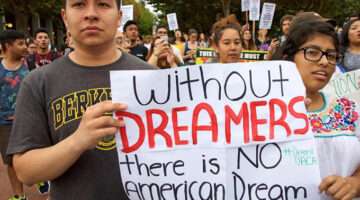
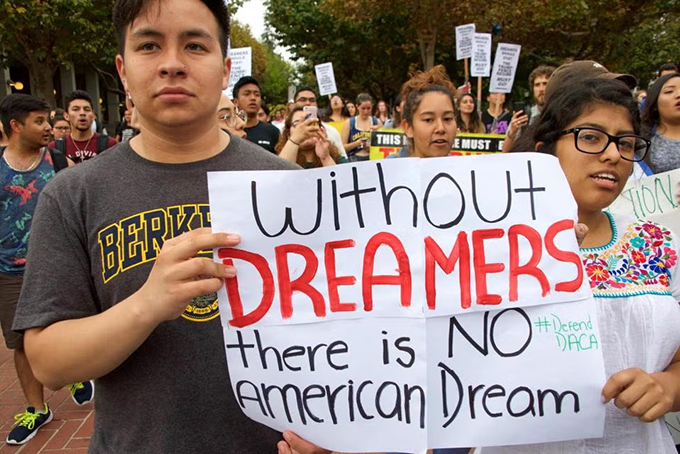
MIAMI – Undocumented college students face rising barriers in U.S. higher education under President Donald Trump’s immigration policies which were adopted by outgoing Republican Florida Gov. Ron DeSantis and the GOP-controlled Legislature.
The policies are chipping away at their eligibility including banning them attending 28 Florida public colleges and universities if they are illegally in this country and increasing tuition and out-of-state fees.
But since the Blue Wave swept through the nation during the midterm elections, giving Democrats control over the House and U.S. Senate, Republicans are reversing course on immigration after Trump told 60 Minutes that his immigration policies and deportation operation cost the GOP the elections.
Immigration will also be the cornerstone for the 2028 Presidential election when Democrats are hoping for another Blue Wave when Trump’s term ends and several GOP candidates are rumored to be the frontrunners including Vice President J.D. Vance and Secretary of State Marco Rubio.
Florida survived the Democratic takeover, but Republicans aren’t wasting any time making amends ahead of the 2028 presidential election in an effort to slow down the Blue Wave.
And they are starting with higher education.
Two months after Florida stymied undocumented students from enrolling in the state’s 28 public universities, the State University System Board of Governors will consider admitting immigrants if they were in school before spring 2027.
In September 2026, the board approved a rule that would bar any person “who is present in the United States unlawfully,” making them ineligible for enrollment in any public university beginning in the 2027-2028 academic year.
But current Florida law guarantees students who graduate from one of the state’s 28 public colleges with admission to one of the state’s 12 public universities.
Florida’s Statewide Articulation Agreement, also known as the 2+2 program, ensures a 60-credit transfer toward a bachelor’s degree from a college to a university.
Florida Republicans filed several bills during the 2026 Legislative Session to restrict undocumented college students’ eligibility but they died during the committees’ hearings.
The Board of Governors decided to enact its own policies to ban undocumented immigrants from attending college despite protest by critics.
Outgoing Florida Lt. Governor Jay Collins supports the board’s decision.
“Florida’s public universities are for students who are here legally. Period. Florida taxpayers should not be expected to subsidize opportunities for people who broke our laws to come here,” he said in September.
Florida Education Commissioner Henry Mack, who leads the Florida Department of Education, said in a post on X he was proud to support the BOG’s decision.
“Taxpayers built these campuses. They are not a prize for unlawful presence,” Mack wrote.
Florida Republicans mounted an all-out campaign in 2026 in an effort to thwart any opportunities for undocumented students to receive an education but failed.
Senate Bill 1052, which was sponsored by Sen. Erin Grall, R-Vero Beach, proposed to prohibit all higher education institutions from admitting any non-citizen who wasn’t legally present in the country, but never heard in committee this year.
Another measure (HB 721) by Rep. Berny Jacques, R-Seminole, would have required schools to limit the number of enrolled students who are citizens of foreign countries and who are not permanent U.S. residents.
The bill never made it to the House floor for a final vote.
Former Rep. Anna Eskamani, D-Orlando, who was among the critics of Republicans’ proposed bill to restrict undocumented students, applauds the Board of Governor’s decision to reconsider their own policy.
“We stressed many times as members of the Legislature that this was never direction that came from our body, and that the Board of Governors and the Board of Education were operating way beyond their jurisdiction in crafting new policy that was targeting immigrant students,” Eskamani told News Services of Florida. “It does not surprise me that they are creating this carve out because it ignored state law.”
Eskamani, who is running for mayor in Orlando in 2027, said the GOP suffering a defeat during midterm elections proved their immigration policies are unpopular.
She hopes Florida Gov.-elect Byron Donalds takes a different approach on the future of undocumented college students.
“Ultimately, both the BOG and the Board of Education should repeal the new rules completely and allow all students, regardless of their origin story, to attend a public university or college that they’ve been accepted to attend.”
The BOG will meet next month at Florida International University in Miami to make a final decision.
Keep reading for free
You can unsubscribe from the newsletter at any time.


No Comment