









Photos courtesy of jazzinthegardens.com and Facebook
By David L. Snelling
South Florida Times
MIAMI GARDENS, Fla. – Following the passage of a property tax relief ballot known as Amendment 3, local governments are bracing for massive revenue losses.
And Miami Gardens’ flagship event is on the chopping block.
The city has announced it has canceled the 2027 annual Jazz in the Gardens at Hard Rock Stadium which was headlined by some of the top legendary R&B singers and rap artists.
The city saves roughly $500,000 annually by doing away with the two-day event to the dismay of concert goers who traveled as far as from New York and Chicago to attend the event.
Miami Gardens announced slashing its special events budget from $6.3 million in 2026 to $558,808, which represents a 91.2 percent reduction.
City officials said more deep cuts are coming for 2027, which they estimated at $9.6 million, which could also impact parks, road repairs, social services, and possibly placing a hiring freeze.
Amendment 3 increases homestead exemption to $150,000 in 2027 and $250,000 in 2028.
It also lowers the annual assessment cap on non-homestead properties, including businesses, apartment complexes, and second homes, from 10 percent to 5 percent.
Jazz in the Gardens, which debuted in 2005, was budgeted at $5 million for 2026, but ran more than $2.5 million over the allocation, according to Florida Politics.
It is the city’s most expensive special event, which draws hundreds of thousands of people at the music festival.
Some of the artists who headlined Jazz in the Gardens included Glady Knight, Keith Sweat, New Edition, Myra, Nelly, Charlie Wilson, Mary J. Blige, Joe, Toni Braxton, Escape, Dru Hill, Lauren Hill, Wyclef Jean, Busta Rhymes and British Jamaican singer Ella Mai.
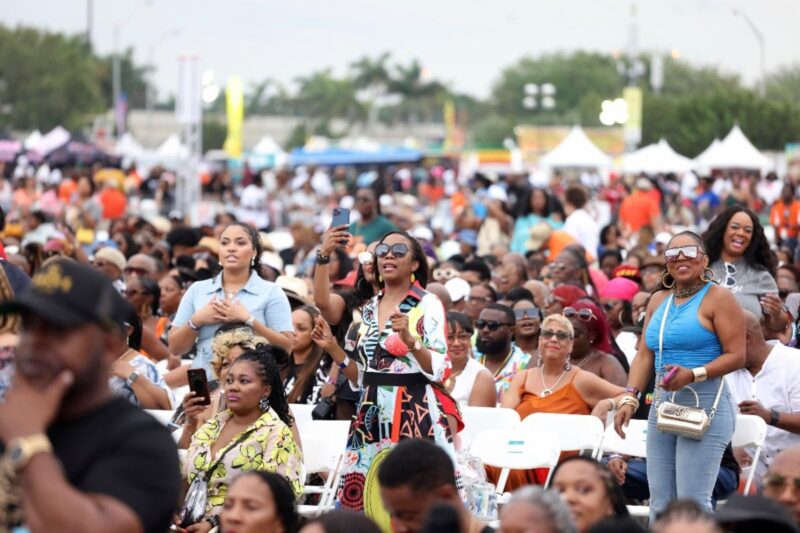
Some Miami Gardens residents indicated spending $5 million on the festival last year was excessive.
Slashing the budget for Jazz in the Gardens yielded mixed reactions from residents.
Miami Gardens resident Nigel Melt said taxpayers’ money is being squandered for a music festival at the expense of homeowners.
He said the money could be used for critical services like education, road repairs, parks and recreation and economic development.
“So that is the best use of taxpayers money?” Melt asked. “Taxing people’s houses in order to throw a concert that loses money and runs $2.5 million over budget? Is that worth people being foreclosed on because they can’t pay all their property taxes or mortgages because the taxes go up every year? Do city residents get to attend free? Or do they get taxed to put on an event.”
But others said Jazz in the Gardens bolstered the local economy, bringing in three times the amount it cost for the event.
“The fact that people really think this is simply about Miami Gardens using taxpayer dollars to “put on a concert” is crazy to me,” said Miami Gardens resident Adrienne White, a homeowner who voted no on Amendment 4. “Do people not realize how much economic activity Jazz in the Gardens generates for local businesses? Hotels, restaurants, small business owners, vendors, and even temporary workers benefit from this event. No, the event wasn’t free to put on, but there’s a difference between spending money and investing in your local economy.”
Lina Love said taxpayers help pay for the event but had to buy tickets at high rates.
She also said Miami Gardens paid a Texas promoter $4 million last year when city officials should’ve hired some locally and saved money.
“Go back to the drawing board and come back with a budget and event that works for the residents, vendors and community,” she said.
Keep reading for free
You can unsubscribe from the newsletter at any time.


No Comment